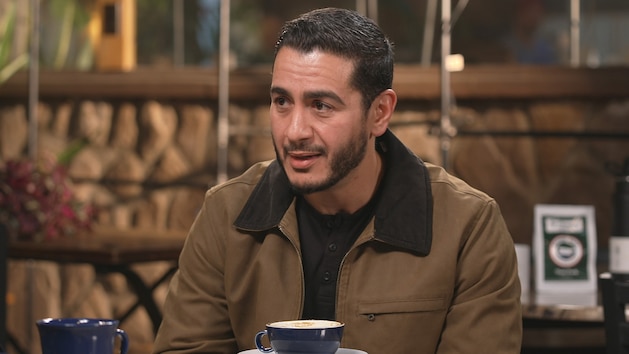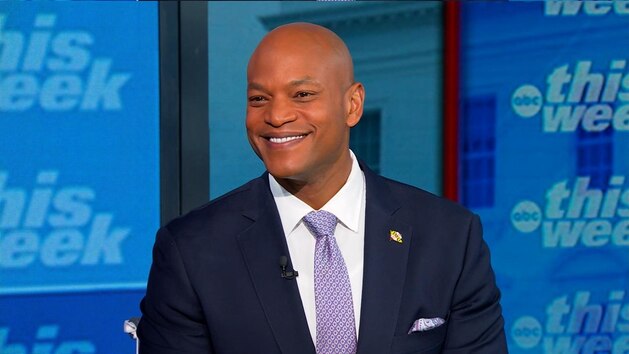
Sen. Alex Padilla listens as Senate Minority Leader Chuck Schumer speaks during a press conference at the U.S. Capitol, Sept. 14, 2026, in Washington. (Finn Gomez/Getty Images)
(WASHINGTON) -- The Department of Homeland Security has allegedly directed hundreds of agents to attempt to access voter rolls, even if they must “misrepresent themselves” to do so, and “fabricate” evidence of voter fraud ahead of the midterm elections, Senate Minority Leader Chuck Schumer and California Sen. Alex Padilla said Monday, citing what they said was information from a whistleblower.
“A DHS whistleblower warns that the department is pulling hundreds, hundreds of federal agents from national security rolls and sending them on a wild goose chase,” Schumer said at a press conference. “The goal: to try and prove Trump's sad, tired, and long-debunked election conspiracy theories."
"The length Trump will go to cheat, lie, and steal in this upcoming election are simply beyond the pale,” Schumer said.
“Apparently, agents are being commanded to violate state laws to access private voter information and fabricate law enforcement records as part of DHS's quote ‘Unlawful Voter Initiative,’" Schumer said, adding that DHS agents allegedly were "hunting for, or worse, manufacturing evidence of voter fraud claims."
The allegations and the whistleblower claims were enumerated in a letter from Schumer and Padilla sent Sunday to DHS Secretary Markwayne Mullin, in which the lawmakers demanded that DHS both explain the alleged actions and end them immediately.
The Department of Homeland Security has been ramping up efforts to look for voter fraud across the country through its investigative arm, Homeland Security Investigations (HSI), multiple sources familiar with the operation told ABC News earlier this month. The effort will include help from investigators from U.S. Citizenship and Immigration Services, the sources said.
"The Department accessed publicly available data from states’ voter rolls and cross referenced them with known aliens in our systems. It’s not rocket science; it’s an easy step to secure our elections,” DHS said in a statement to ABC News, in response to the whistleblower allegations.
“While ICE Homeland Security Investigations is not able to comment on any active investigations, HSI is actively rooting out and investigating election fraud wherever it can be found," the DHS statement further said. "We have repeatedly demonstrated that aliens can and do vote in our elections. Under President Trump, HSI is committed to restoring integrity to our election systems and ensuring that American citizens and only American citizens are electing American leaders.”
“They're even asking people to lie about their identities, so they can create this illegal scheme," Schumer said Monday of DHS agents' alleged activities. "We are weeks from the midterms. Americans should not have to fear being targeted by their own government because of how they're registered to vote.”
Padilla also highlighted the allegation, saying Monday that the whistleblower claimed DHS agents were "ordered to misrepresent themselves to access state voter systems, systems explicitly warning that accessing another voter's information without authorization is against the law."
Padilla further alleged the federal government is taking this route to access voter data because states such as his have not complied with demands for them to provide those records.
“But even more troubling is that when officers have raised questions about the legality of this initiative, they've reportedly been told to proceed anyway and promise that they won't be held quote personally liable,” Padilla said, citing the whistleblower claims. “That's what's coming from superiors in response to officers who are raising these concerns. If this effort is truly legal, then why does DHS leadership have to promise its officers that they're not going to be held liable? That says a lot.”
Padilla alleged the Unlawful Voter Initiative is “pretext” for the Trump administration to use “manufactured evidence to intimidate voters, to disenfranchise eligible Americans, and even undermine or challenge this November's election results.”
Ships are anchored in the Strait of Hormuz on Aug. 10, 2026, off the coast of Bandar Abbas, Iran. (Ali Saeedi/Getty Images)
(WASHINGTON) -- The war with Iran has cost the United States at least $38 billion through the end of July and is expected to further push inflation higher for American households, according to a nonpartisan Congressional Budget Office (CBO) assessment released Tuesday.
The CBO also warned that depleted weapon stocks could take a half decade or longer to rebuild, crippling the Pentagon’s ability to respond to another major conflict.
The assessment describes the financial and military consequences that will persist beyond the fighting, leaving the Pentagon with fewer weapons available for another major conflict while skyrocketing energy prices put pressure on household budgets.
The report notes that the Pentagon did not cooperate with the analysis or provide information requested by the Congressional Budget Office. The Pentagon did not respond to ABC News' request for comment on the report.
The CBO serves as Congress’ scorekeeper, providing lawmakers with independent estimates of federal spending and the costs of legislation. Its reports noted it relied heavily on public information.
The budget office’s estimate covers direct costs from the U.S. and Israel launching their campaign against Iran on Feb. 28 through Aug. 1, excluding expenses related to U.S. bases devastated by Iranian bombardments.
Munitions account for most of the spending. CBO projects another $2 to $3 billion in monthly costs, but says the bill could climb during sustained fighting.
Americans will also bear what could be mounting costs adding to already inflation rates, with projections estimating the consequences of the war to add roughly a half percentage point to the inflation rate early next year, meaning the costs of goods, housing and food will continue to rise, driven largely by climbing energy prices stemming from supply disruptions in the Middle East.
Depleted weapons stockpiles
The war has significantly depleted U.S. inventories of missiles and anti-air defense weapons, leaving fewer munitions available for another major conflict.
“The shortfall would become especially problematic if a conflict arose with an opponent whose arsenal included large numbers of ballistic and cruise missiles,” the CBO said in its report.
Those concerns predate the Iran war. A congressionally mandated commission warned in 2024 that the U.S. could largely exhaust its munitions inventories within three to four weeks of a conflict with China. Some critical weapons, including anti-ship missiles, could run out within days.
“Missile defense interceptors are in short supply because they have been produced at relatively low rates; thus, DoD’s inventory of such missiles was limited,” the CBO said in its report.
A Pentagon inspector general report on Monday came to the same conclusion that the massive expenditure of munitions against Iran has "resulted in strategic inventory shortfalls,” which revealed significant issues with U.S. force’s ability to resupply, as missiles take years to build. Persistent bottlenecks include the complexity and daunting list of materials and the recruitment of skilled labor to build them.
Patriot and SM-6 interceptors, used to shoot down incoming missiles and drones, cost roughly $4 million each, according to the CBO. THAAD interceptors cost about $12 million apiece, while more advanced SM-3 interceptors can cost roughly $28 million each.
The stark warning on munitions shortages comes just days after Adm. Brad Cooper, the war’s top commander, said in an interview on CBS Sunday that he’s not concerned about munitions depletions.
“We’re armed and ready for any contingency,” he said.
President Donald Trump on Monday dismissed the Pentagon IG's report. The administration has maintained the Pentagon can continue fighting with the arsenal it has.
Care for casualties, damage to bases will push up costs
The war’s ultimate cost is likely to be far higher once decades of veterans’ disability payments and medical care are included. More than 800 U.S. troops have been wounded, with traumatic brain injuries emerging as the conflict’s signature wound.
“Counting munitions expended while leaving veterans’ care and benefits is not a real war-cost analysis,” Rep. Mark Takano, the ranking Democrat on the House Veterans Affairs Committee said in a statement to ABC News. “It is a bill sent to veterans and taxpayers later.”
CBO’s estimate excludes much of the costs associated with the damage to U.S. bases in the Middle East, including those in Kuwait, Bahrain and Jordan, some of which have been devastated by Iranian bombardments. Pentagon planners have long anticipated shrinking the military’s footprint in the region to shift resources to the Pacific.
The analysis comes as Congress has not enacted funding to cover the costs of the Iran war. In July, the House passed a $95 billion budget blueprint to provide up to $60 billion for military funding. The plan would also provide up to $13 billion for intelligence costs, totaling $73 billion to cover the Iran war.
The Senate has no immediate plans to move on the budget blueprint to provide Iran war funding before the midterm elections. Historically, conflicts have had special supplemental funding as to not eat much into the military’s day-to-day operational needs in its $1 trillion budget.
ABC News was first to report that the Army has dramatically scaled down much of its training this year, partly to accommodate the enormous surprise expense of the conflict.
“Well, not before the election. No, I mean that'll probably be a post-election push,” Senate Majority Leader John Thune told reporters on Tuesday.
House Budget Committee ranking Democrat Brendan Boyle of Pennsylvania said the report “makes clear that the war has also cost American taxpayers tens of billions of dollars and counting, while continuing to drive up costs.”
“Donald Trump and Republicans have spent years telling Americans that we cannot afford to help families here at home, but apparently they can find tens of billions of dollars, and potentially much more, for a reckless war that is leaving Americans to pay the price,” Boyle said in a statement.
The Kennedy Center on Sept. 2, 2026, in Washington, D.C. (Finn Gomez/Getty Images)
(WASHINGTON) -- One month after the board of the Kennedy Center voted to add President Donald Trump's name to the historic building, the board voted on Tuesday to immediately close the performing arts center's main building, sources told ABC News.
The vote came an hour after a federal judge blocked the Kennedy Center board from adding a tribute to Trump on the building or site.
Last month, the Kennedy Center board members -- who Trump last year replaced with his allies -- voted to close the famed cultural institution for a two-year renovation.
Lamenting that the "drama at the Kennedy Center continues" despite a permanent injunction and laws to the contrary, U.S. District Judge Christopher Cooper said the board is engaging in "linguistic gymnastics" to place Trump's name somewhere on the grounds. And Cooper poked holes in the argument that adding Trump's name was necessary to secure the financial future of the center.
Judge Cooper, following a conference Tuesday morning, issued a written order blocking the attempt to add Trump's name to the building, concluding it violated a previous court order and congressional statute.
"Simply put, Defendants cannot install memorials for President Trump or anyone or anything else at the Kennedy Center without Congress's blessing. The board resolution bucks a federal court order and a statute Congress enacted," Cooper wrote.
Judge Cooper previously blocked Trump from renaming the Kennedy Center after himself, but the board voted last month to add Trump's name to the building nonetheless, in order to recognize him as the person who "renovated and restored" the iconic structure.
"Linguistic gymnastics cannot extricate the Kennedy Center's Board from an operative judicial order or the governing statute it was designed to enforce," Cooper wrote in Tuesday's ruling.
Judge Cooper's ruling blocks the Trump administration from adding Trump's name to the building -- -- along the lines of "The John F. Kennedy Memorial Center for the Performing Arts renovated and restored by President Donald J. Trump" -- as well as renaming the site of the center "President Donald J. Trump Plaza." The judge did not decide about another proposal to say the Kennedy Center is "endowed by the Trump Kennedy Center Fund," because the money has not yet been raised for the fund.
Cooper also pushed back on the assertion that the future of the Kennedy Center relies on Trump's fundraising. He noted that Congress also already appropriated $257 million for the center's renovation, and suggested that the president's allies manufactured the Kennedy Center's financial problems.
"The renaming of the Center coincided with declines in revenue and contributions, as artists cancelled performances, the Washington National Opera ended its 50-year residency, and ticket sales and viewership of the Kennedy Center Honors broadcast dropped precipitously," Cooper wrote.
Judge Cooper also said that the Kennedy Center has failed to provide any evidence to demonstrate that "current or future donations hinge on President Trump's name being on the building."
"The Court may not license a violation of those authorities under threat that some unidentified donors will withhold their largesse if the Board is not allowed to have its way. It can even less reward a decision by Board members, including the Chair, to curb the Center's fundraising efforts because they cannot abide statutory restrictions on displaying his name," the ruling said. "Predictions of future actions by the Board in response to being told no therefore cannot concern the Court."
The Board of Trustees was scheduled to meet Tuesday afternoon, though the Trump administration overnight said the meeting would be "focused exclusively on the necessary closure" of the center, and not on additional ways to honor President Trump. Trustees were expected to vote on a measure declaring that the Kennedy Center's main building is "unsafe for continued occupancy" and must be closed for a two-year renovation.
Kennedy Center leadership had previously argued that adding the president's name to the structure would be necessary to save the center from "certain fiscal collapse within weeks."
"The Board understands that without such appropriate recognition it is unlikely that President Trump will provide the fundamental oversight of the renovation of the main building and lead the fiscal rescue of the Center," said a resolution initially scheduled to be introduced today before it was delayed for a future meeting.
In their late-night court filing, Justice Department lawyers included an email sent to the board at 7 p.m. Monday by Kennedy Center official Joe LaFauci, indicating that a separate draft resolution proposing ten new ways to honor Trump would not be considered, and that the board "stands by" its earlier vote to recognize the president.
LaFauci in his email said the update to Tuesday's agenda was due "to the recently exacerbated structural emergencies" at the center, the court filing said.
Late on Monday night, Commerce Secretary Howard Lutnick separately posted security video of a partial ceiling collapse that occurred during a rainstorm earlier this month. The video shows a chunk of debris crashing onto an empty red carpet.
"If a performance had been underway, patrons could have been killed," Lutnick said in his post on social media. "People cannot be allowed to go into this building any longer."
The center voted in December to add Trump's name on the outside of the building before a federal judge, U.S. District Judge Christopher Cooper, ordered its removal in May.
The board voted 23-3 last month on a resolution to close the facility for two years as part of a $285 million renovation plan, according to a court filing. The board, members of which were largely appointed by Trump, also voted to add Trump's name back onto the Kennedy Center building as many as two more times, according to the filing.
While Congress already appropriated $257 million for the project, the board has argued that Trump would raise another $100 million for the center.
The board as it voted last month said it would re-add Trump's name to the building as the man who "renovated and restored" the center, adding, if a fundraising goal is hit, that it had been endowed by the "Trump Kennedy Center Fund."
But Cooper is currently weighing whether that would violate a statute prohibiting additional memorials at D.C.'s only memorial to former President John F. Kennedy. Cooper is set to hold a 10 a.m. ET scheduling conference on the future plans for the center and the board is preparing to meet privately at 12:30 p.m. ET.
Trustees are expected to vote on Tuesday afternoon on a measure declaring the Kennedy Center's main building "unsafe for continued occupancy," and ordering that it be "closed to patrons forthwith."
Cooper is also positioned to eventually decide whether the board can move forward with its latest plans to close the center, plans that have taken on new urgency following the ceiling collapse and the new claim of center officials that the entity is quickly running out of money to remain operational.
An attorney for Rep. Joyce Beatty (D-Ohio), who has filed a lawsuit challenging the planned closure and renaming, praised the decision not to move forward with another resolution honoring the president.
"Trump & cronies back down on HALF of the crazy," lawyer Norm Eisen wrote on social media on Tuesday. But Eisen added that the plan to immediately close the center amounts to "foolishness" that he said Beatty's legal team will fight.
Programming at the Kennedy Center, which normally funds its operations, effectively ended in early July. Ticket sales had reportedly been dropping off for months prior, following the board's vote last December to rename the facility. Cooper ruled that move unlawful in May.
Despite Congress-approve funding that's already on the table, center officials last weekend again underscored the need to honor Trump so that he might be enticed to lead additional efforts at raising money and oversee the renovation.
"The Board understands that without such appropriate recognition it is unlikely that President Trump will provide the fundamental oversight of the renovation of the main building and lead the fiscal rescue of the Center," read the text of a draft resolution that is -- according to LaFauci -- no longer up for consideration today.
Federal Bureau of Investigation Director Kash Patel testifies during a Senate Judiciary Committee hearing on Sept. 15, 2026, in Washington, DC. The committee held the oversight hearing to examine the Federal Bureau of Investigation. (Win McNamee/Getty Images)
(WASHINGTON) -- FBI Director Kash Patel is testifying before the Senate Judiciary Committee on Tuesday morning for an oversight hearing, the first time Patel is testifying since he clashed with lawmakers over reports of job performance issues more than four months ago.
The hearing comes after the committee's top Democrat called on Patel to be replaced following a report published in The Atlantic in May that alleged Patel had "bouts of excessive drinking" and job performance issues.
Sen. Dick Durbin, the ranking member of the Senate Judiciary Committee, said in a statement that Patel lacks "the experience, judgment, and temperament to lead the FBI" and should be "replaced immediately." Durbin reiterated those comments in his opening statements on Tuesday morning.
The report in The Atlantic was a focus of several lawmakers' questions when Patel last testified on Capitol Hill in May with several heated exchanges over Patel's drinking habits and job performance.
Patel said earlier this year that he's "never been intoxicated on the job," following the report. Patel sued The Atlantic over the article, demanding $250 million in damages.
During Tuesday's hearing, Patel is expected to tout decreased crime nationwide, according to a source familiar with his testimony. President Donald Trump has frequently promoted a decrease in crime, saying on Friday that crime is "under control."
The director will tout the increase in violent crime arrests, which are up 90%, arresting violent gang members are up 31% and he is expected to say it is the "most prolific run of crime reduction in history," according to a source.
The FBI saysviolent crime is down 9.3% from 2024 to 2025.
Patel is also expected to discuss the FBI's efforts to thwart major terrorist incidents and highlight information sharing among law enforcement partners, according to a source familiar with his testimony.
He is expected to talk about how he has made the FBI more nimble as director, accelerating the reduction of bureaucracy of the agency.
Patel's time at the helm of the FBI has been marked by several controversies, which lawmakers may question him about. Earlier this year, Patel joined in on Team USA hockey's locker room celebrations in Italy shortly after the team won the gold medal, which drew scrutiny about his use of FBI resources to attend. He was also grilled during a House hearing late last year about his handling of the Jeffrey Epstein files.
U.S. Sen. Mitch McConnell (R-KY) arrives for a vote at the U.S. Capitol on September 14, 2026 in Washington, D.C. This is McConnell’s first public appearance in over 90 days after he recovered from a fall and illness. (Finn Gomez/Getty Images)
(WASHINGTON) -- Kentucky Sen. Mitch McConnell returned to the Senate on Monday for the first time since being hospitalized in June following a fall.
"Today, I'll cast my first Senate vote since I took a bad fall back in June," McConnell said in a statement. "I'm really looking forward to being back on the Senate floor and seeing my colleagues."
McConnell, who was in a wheelchair, briefly addressed journalists outside the Senate chamber this afternoon before heading to the floor to cast his first vote since June 11.
"After two years -- two decades -- of dodging your questions, I wasn't sure how many of you would be here today," McConnell joked at the outset. "So I am glad to see you. It is time to get back to work and finish the job for this Congress."
McConnell said he would be focused on the farm bill -- which previously failed to advance out of committee due to McConnell's absence.
"As you know, I have an ongoing interest in NATO and backing up our good friends who are totally in the fight against the Russians," he said.
McConnell said in his Monday statement that he was not yet fully recovered but that he would try to be present for critical votes.
"My recovery has been a long and often frustrating process, and the lingering effects of childhood polio haven’t made it any easier. I’m still not quite back to 100%, but I’ve assured Leader Thune that, as I continue with physical therapy on the advice of my doctors, I will do my best to be present for tough votes when our Conference needs me," McConnell said.
McConnell was hospitalized on June 14 for reasons that were initially undisclosed in statements from his office. Subsequent statements from the senator revealed that he had suffered a fall that left him hospitalized.
After weeks of inpatient rehabilitation treatment, McConnell announced in an Aug. 6 statement that he'd be continuing his recovery at home.
Before Monday, the senator had not been seen publicly since the June 14 fall. McConnell has missed six weeks of Senate business in Washington since his injury.
In statements issued during his recovery, the senator has said he's keeping up with his work in the Senate.
"On the advice of my doctors, I'll maintain an intensive regimen of physical therapy from home during the state work period, and I’ll continue to engage with my staff and colleagues on important Senate business," McConnell said in an Aug. 6 statement.
Donald Trump Jr. and his wife Bettina Anderson disembark from Air Force One as they arrive alongside U.S. President Donald Trump at Dublin Airport, September 12, 2026 in Dublin, Ireland. (Anna Moneymaker/Getty Images)
(WASHINGTON) -- A Russian oligarch with ties to President Vladimir Putin allegedly contributed hundreds of thousands of dollars for events around Donald Trump Jr.'s wedding to Bettina Anderson earlier this year, according to a report from ProPublica published Monday, with Anderson not disputing the "gift."
The president's son held his May wedding at an exclusive island in the Bahamas, with the oligarch -- Umar Kremlev -- footing a large portion of the bill for the events later that weekend, according to records reviewed by ProPublica, as well as three people familiar with the event who spoke with the outlet.
ABC News has not independently confirmed the details of the ProPublica report.
Kremlev covered expenses including renting out a private island and paying for a firework show, according to the ProPublica report. Payments for the expenses allegedly came from an entity affiliated with the controversial International Boxing Association -- where Kremlev serves as president.
When ABC News asked about the report, the White House and a spokesperson for Donald Trump Jr. pointed to a recent Instagram post from his new wife, Anderson, which does not dispute that Kremlev paid for part of the post-wedding celebrations, but stressed their wedding ceremony was attended "ONLY by our family."
"Our dear friend Umar very generously hosted two incredible nights of celebrations for us AFTER our wedding. It was an extraordinarily generous wedding gift from a friend, and something for which we were and remain incredibly grateful," Anderson wrote in her post.
"It’s unfortunate that something so personal and happy can be recast as something political or sinister simply because of who someone is or where they come from," Anderson continued.
"So, for anyone determined not to let the facts get in the way of a good story: NO CONSPIRACY, NO MYSTERY," said Anderson, who added that the weekend celebrations were initially planned to be a "fun weekend with friends," but when plans "changed," they decided to get married before the trip and celebrate as newlyweds.
In response to detailed questions from ProPublica, the outlet said that a spokesperson for Trump Jr. also did not dispute the payments from Kremlev.
"Umar is a personal friend of Don," the spokesperson told ProPublica.
It's not clear why Kremlev paid for parts of Trump Jr.'s wedding celebration.
ProPublica reported that Kremlev had recently traveled to China as part of the delegation accompanying Putin, and that Putin had recently awarded him the state honor of the Order of Friendship.
The Russian government and Putin have led coordinated campaigns to interfere in U.S. elections in both 2016 and 2020, according to national security reports.
While Trump Jr. leads the Trump business empire with his brother, Eric Trump, he still has major influence inside his father's political orbit -- including pushing for his friend, JD Vance, to be named as Trump's running mate for 2024.
The spokesperson told ProPublica that Kremlev is "not someone he has a business relationship with" and that the men met through a mutual friend in the hunting world and bonded over their love of boxing and the outdoors.Kremlev's press office told ProPublica that “Mr. Kremlev and Mr. Trump Jr have a friendly relationship” and they first met "a couple of years ago." ABC News has also reached out to Kremlev for comment.
The intimate guest list for the celebration made the presence of Kremlev, among a "large group" of other Russian guests, puzzling for attendees, according to ProPublica.
President Donald Trump notably did not attend Donald Trump Jr.'s wedding, posting on social media that "circumstances pertaining to Government, and my love for the United States of America" prevented him from joining the celebration in the Bahamas. He had also canceled his originally planned travel to his Bedminster, New Jersey, golf club and remained in Washington that weekend.
The day prior, Trump said he was going to "try and make it" and noted that it was a "small, little private affair" -- though he said the event is "not good timing" for him given his responsibilities surrounding the war in Iran.
"I said, 'You know, this is not good timing for me. I have a thing called Iran and other things,'" Trump had said in the Oval Office in May.
Capitol Hill dome on Sept. 11, 2026, in Washington, D.C. (Roberto Schmidt/Getty Images)
(WASHINGTON) -- Lawmakers from both chambers return to Washington this week for the final legislative push before the November midterm elections, the first time since July 23 that both chambers will be in Washington.
The House is in session for its final week of legislative business before the election after Speaker Mike Johnson scrapped two previously scheduled weeks of votes. The Senate has three weeks of business ahead of it -- as no changes to the Senate schedule have been announced -- though it’s possible Majority Leader John Thune could decide to dispatch his members to the campaign trail earlier than planned as well.
The September session is often plagued by a looming government funding deadline. But lawmakers have already passed a stopgap funding bill that President Donald Trump has signed to keep the lights on until Dec. 11, alleviating any immediate deadline pressure this month. Senate Republicans are also increasingly unlikely to take up a massive budget bill before the midterms.
The move to kick the can on government funding and delay a potential budget reconciliation bill means both items could be at the top of a large pile of priorities facing lawmakers in the lame duck session.
But freedom from a fiscal showdown doesn’t mean lawmakers won’t feel the pressure -- both now and in the lame duck -- to produce.
Here's what the House and Senate have ahead of them:
Funding the military: Over the summer recess, new concerns were stoked about leadership at the top of the military following Dan Driscoll’s resignation as Army secretary. Larger concerns about strained military resources and funding for the war in Iran also became more pressing, as the conflict stretches into its seventh month.
Legislators on both sides of the aisle will likely need to chart a path forward on military funding, especially as the must-pass National Defense Authorization Act continues to stall and the Senate has effectively thrown in the towel on Reconciliation 3.0 -- the $95 billion GOP package that aimed at replenishing the military as the Iran war drags on, as well as billions in relief for American farmers and some aspects of the SAVE America Act.
The NDAA doesn’t need to be approved until the end of the year, but if lawmakers don’t find a bipartisan path for it soon, they’ll add to a potential lame duck pileup.
Russia sanctions: Next week, House Republicans will attempt to pass the Russia sanctions bill -- despite objections from many Democrats -- as GOP leaders will bring the bipartisan legislation to the floor under a rule, requiring only a simple majority for passage while also signaling that there isn’t sufficient bipartisan support in the House to suspend the rules and pass it via a two-thirds majority.
Though the House passed a budget resolution, it’s not clear whether Republicans in the Senate will attempt to take that up before they leave. Doing so would expose members to potentially challenging votes in a vote-a-rama, and it's also not clear whether Thune even has the votes in his unruly majority to pass it.
Anti-fraud measures: The House will also aim to close out its pre-election legislative blitz by debating several fraud-related measures on the floor this week, including the Preventing Ripoffs and Obtaining Oversight of Funds Act, another bill to protect taxpayers from healthcare fraudsters, and a bill to establish a National Fraud Enforcement Division within the Department of Justice under the authority of the attorney general.
Regulating AI: A renewed focus on regulating artificial intelligence is also likely to come following reports this week that raise significant concerns about AI security. Lawmakers on both sides of the aisle have demanded information from OpenAI and launched investigations.
Crypto and NIL could come up: Other major bills could also finally get their time in the sun during this stretch of session. The Senate is expected to take up a Name, Image and Likeness [NIL] bill as soon as this week. A controversial bill aimed at regulating cryptocurrency could also find its way to the Senate floor, though that bipartisan legislation is currently plagued by concerns from Democrats that the bill includes ethics carve-outs that may be favorable to Trump.
McConnell's still absent: It’s also not yet clear whether Sen. Mitch McConnell, who has not been on Capitol Hill since a June 14 fall put him in the hospital, will be present this week. A spokesperson for McConnell did not provide an update when reached by ABC News on Friday.
Trump officials on the Hill: Several high-level Trump officials are also slated to appear on the Hill this week. Senators on the Judiciary Committee will hear from FBI Director Kash Patel on Tuesday. Treasury Secretary Scott Bessent is slated to appear before the House Financial Services Committee on the same day.
OpenAi founder Sam Altman during the G20 Innovation Ministerial on Sept. 2, 2026, in Chapel Hill, North Carolina. (Sean Rayford/Getty Images)
(WASHINGTON) -- Sam Altman, the chief executive of OpenAI, joined others in the artificial intelligence industry in saying that his company would welcome a slower development pace for AI to ensure that the technology's capabilities don't "get ahead of alignment and monitoring," as President Donald Trump said there would be "more good than bad" from the technology.
The president, who spoke with reporters on Sunday as he traveled back to Washington from Ireland, said he wouldn't downplay concerns about AI advancements. He also sought to position the AI race as a competition between the United States and other countries -- including China.
"I've said it from the beginning," Trump said. "Whoever wins AI -- and we're leading by a lot. Whoever wins AI wins."
In a social media post on Monday, Trump reiterated the message, saying "The only control or 'guardrails' that AI needs is a STRONG AND SMART (High IQ!) PRESIDENT, and the U.S.A. has that, in spades!"
He added that there is a "SICK conspiracy going on against AI and Data Centers, and the only one that is happy about it is China,” and that the U.S. is "leading China" as well as other countries in the technology.
Vice President JD Vance said Monday that the the administration is "concerned" about the technology, but any regulations that may occur need to be done "smartly" -- with the current situation feeling like a "Trojan horse."
"It's something that we're concerned by, but we want to make sure that we actually regulate smartly, and we're thoughtful about the risk here. So, there are obviously risks to AI. There are some benefits to AI. I have to say, just personally, I feel a little bit weird about the fact that you have so many Frontier AI tech companies kind of coming to the government and begging the government to regulate them — it feels a little bit to me like a bit of a Trojan horse," Vance said.
The comments from Altman, Trump and Vance followed a warning issued last week by Jacob Coxon, a former safety researcher for Anthropic and OpenAI, two prominent tech companies, who said that he was resigning from Anthropic.
Coxon said in a social media post that neither Anthropic nor OpenAI "is acting responsibly. They are racing straight to self-improving superintelligence and gambling with our lives." He also highlighted the fear within the industry about the potential for an AI takeover.
"The people building AI earnestly believe that it could kill us all by the end of the decade," Coxon wrote.
Altman said late on Sunday that his company would welcome a federal framework "that sets consistent safety requirements for frontier AI."
"But we do not believe we need to wait for an anti-trust exemption or legislation to begin the work of providing this confidence," Altman said on social media. "Consistent rules to manage frontier risk so that we can maximize the benefits are a good idea (and we are excited by ideas like independent auditors)."
That statement came after House Democratic Leader Hakeem Jeffries said Sunday that lawmakers need to take urgent action on the growing threat of AI.
"We certainly need to begin to act urgently to address the challenges that exist," Jeffries said on ABC News' “This Week with George Stephanopoulos."
"We should take decisive action now so that we can slow down, as the CEOs have recently acknowledged, slow down the pace of development in order to protect the American people and ensure that AI is proceeding safely," Jeffries added.
Lawmakers from both chambers return to Washington this week for the final legislative push before the November midterm elections, a renewed focus on regulating artificial intelligence is also likely to come following reports this week that raise significant concerns about AI security. Lawmakers on both sides of the aisle have demanded information from OpenAI and launched investigations.
Altman on Sunday detailed "two ways AI progress could go very badly and that we must avoid."
The first, he said, would be an "unacceptable" loss of control over AI. The second, Altman said, would be to "end up in a world with too much concentration of power."
"If an extraordinarily powerful AI is used by one person or company to impress their worldview onto everyone else, the results could be extremely dystopian," he said. "Avoiding these two threats requires walking a narrow middle path; for example, one country could gain too much power. Another example is one lab ending up with too much power."
Anthropic's CEO, Dario Amodei, published a blog post last week, in which he said that "we must pace the frontier," as in slow the pace of AI development.
"We must slow the pace at which we improve the capabilities of AI models," he wrote. "Progress will still seem fast, and we must make wise use of the time we gain."
Altman on Sunday said, "When we talk about 'pacing,' we do not mean 'stopping.'"
"Progress has been rapid and will continue to be. But it should be slower than it otherwise could be; interventions like safety cases and monitoring have significant costs," he wrote. "Pacing will be well worth this cost; no amount of American competitive pressure should justify recklessness, or let capabilities get ahead of alignment and monitoring."
"Where we will need the help of our government is for international coordination," he added. "But first we should do what we can ourselves."
The president on Sunday also confirmed that he personally uses AI, but did not say which systems or for what purposes he uses it for.
ABC News' Zunaira Zaki and Ahmad Hemingway contributed to this report.
U.S. President Donald Trump speaks during a ceremony commemorating the 25th anniversary of the September 11th terrorist attacks in Arlington, Virginia. (Chip Somodevilla/Getty Images)
(WASHINGTON) -- President Donald Trump defended his proposal to give Americans a $5,000 "dividend" -- which some dismissed as a stunt or bribe -- seeming to suggest it as a "reward" for voters who he says endured the Biden administration.
The comments came in response to ABC News pressing him on why he would need to offer such a payment if his economic policies are working.
Trump was asked on the tarmac on his way back to Washington, D.C. -- after he closed out night two of the Republican Midterm Convention in Dallas -- whether the proposed payment amounted to an incentive for voters to turn out in the midterm elections.
The proposed payment to all American adults -- which some estimated would cost $1.3 trillion -- was conditioned on Republicans retaining control of both houses of Congress in the midterms and the money being spent in the U.S.
The White House issued a press release on Thursday that suggests the checks could come from commitments the Trump administration has received from companies to invest in the private sector. It's unclear how those investments, which have not yet materialized, would be made into dividend checks for Americans.
"The U.S. is still $40 trillion in debt, if your economic policies are working, why do you need an incentive for people to turn out to vote?" ABC News asked the president directly.
Trump rejected the premise that the payment was intended to encourage voter turnout.
"I think what you're going to do -- I didn't do it for turning out the vote, I did it as a reward for people having to put up with five years-four years of horrible situation caused by Biden," Trump said.
Trump then pointed to what he described as problems with the Biden administration's economic and immigration policies.
"I mean, they had to put up with the four years, and they carried on for at least a half an additional year with horrible, just a horrible thing that Biden did to our country," Trump said. "And that's not only just from an economic standpoint. You look at the border, you look at the crime, and now we've got it under control."
"But what, what a period of time," Trump continued. "It's almost a reward for the people having to put up with Biden's policy."
Trump has said the proposed $5,000 payments would be funded through what he has described as "tremendous growth."
"We have tremendous growth. We have growth like no country has ever seen before," Trump said. "We have trillions of dollars coming in, and that will end up being not a very big problem at all."
Many members of Congress have expressed opposition to Trump's plan, with Senate Minority Leader Chuck Schumer slamming the move.
"Trump’s presidency is so failed and broken, he is resorting to trying to bribe the American people for their votes," Schumer wrote in a social media post.
Democratic Rep. Ted Lieu, who serves as the vice chairman of the House Democratic caucus, joked in a social media post that "If Democrats flip the House and Senate everyone will get a $10,000 dividend, and a pony, and free ice cream for life."
Outgoing Republican Rep. Thomas Massie said he fears the payments would cause more inflation and accused Trump of trying to buy votes.
"Frankly, I'm insulted by the notion that my vote this November could be bought for 5k," Massie wrote in a post on X.
Just last year, the president declared that every American would get a $2,000 rebate check paid for by tariff revenue.
"A dividend of at least $2000 a person (not including high income people!) will be paid to everyone," he wrote on his social media platform in November 2025. That has not happened yet.
Even the most generous accounting, such as Penn Wharton's Budget Model, estimates the tariffs brought in roughly $300 billion. And that's not counting the money the Treasury has had to pay back to American companies after the Supreme Court ruled Trump's tariff regime illegal. As a result of those debts, the government is currently paying out more in tariff revenue than it is collecting.
ABC News’ Justin Fishel and Sarah Beth Hensley contributed to this report.
The Supreme Court has blocked Missouri Republicans from moving forward with a U.S. House map that the state's highest court had already invalidated ahead of the November election. (ABC News Live)
(WASHINGTON) -- The Supreme Court has blocked Missouri Republicans from moving forward with a U.S. House map that the state's highest court had already invalidated ahead of the November election.
In a brief unexplained order, and over no noted dissent by any justices, the court granted a request by a Democrat-backed advocacy group to pause a lower federal court order that greenlit the GOP-favored map just days ago.
The decision likely ends the legal whiplash over Missouri's map two months before the high-stakes midterm election takes place. It also hands Democrats a small victory in the nationwide mid-decade redistricting war.
State Republicans could still technically attempt to ask the justices to take the case for oral argument and decide the merits, but that process would very likely exceed the time left before the vote -- and the Democratic-favored map would remain in effect in the meantime, the order indicated.
State election officials will now bear the brunt of having to quickly lay groundwork for administering the vote with a district map different from the one used in the primary.
The group that sought to preserve the 2022 map calls this the "definitive answer" in Missouri for November.
"The law is the law, the Missouri constitution is clear as was the Missouri Supreme Court," Richard von Glahn, executive director of the group pushing the referendum vote, People Not Politicians, said in a statement. "Over 305,000 Missouri voters -- Republicans, Democrats and Independents took action to block this political power grab last fall. People, not politicians, will have the final say when they vote NO on Proposition A this November."
The state's Republican-controlled legislature last year passed into law a new congressional map that redrew the district currently held by Democratic Rep. Emanuel Cleaver to lean Republican as part of a nationwide mid-decade redistricting push encouraged by President Donald Trump.
But Democrats and other opponents of the new map filed legal challenges, pushing for a ballot initiative to put the new map up for a vote in November. They also argued that if the new map was put up for a referendum vote in November, that would suspend the law establishing the new map unless voters approved it and that Missouri's elections should be held under the state's older congressional map.
Missouri Secretary of State Denny Hoskins initially decided in early August that he would not certify the referendum to the ballot, saying he had determined it was unconstitutional. People Not Politicians successfully appealed that ruling to the state Supreme Court, which ruled to block the new map from being used in November and to allow the ballot initiative to proceed.
Republicans appealed to the U.S. Supreme Court seeking intervention as they simultaneously pursued a second-track legal front.
Just days ago, Supreme Court Justice Brett Kavanaugh, who oversees Missouri federal courts, declined to intervene in the dispute over Missouri's congressional map.
Earlier this month, a federal district court judge directed the state to use the GOP-favored map, which was used in the primary, even though the state's highest court directed the opposite.
Missouri Republicans had pushed back against a change to the map, saying in a court filing that a change-up at this late hour would "disenfranchise millions of primary voters" and "unilaterally void a congressional map before a statewide vote."
U.S. President Donald Trump speaks on stage on the first day of the 2026 Republican National Convention on Sept. 9, 2026, in Dallas, Texas.(Alex Wong/Getty Images)
(WASHINGTON) -- President Donald Trump said on Wednesday that he would give American adults a $5,000 "dividend" if Republicans kept the House and Senate in the midterm elections this fall, marking at least the second time he's promised to use tariff revenue to send payments to Americans.
"Because of our tremendous strength and success economically, I will issue a dividend to every adult citizen in the United States of America for $5,000," Trump said, likening it to what "a successful company will do a cash distribution to its shareholders."
ABC News has reached out to the White House for further details.
The president's claim, which came during his speech on the first night of the GOP’s midterm convention, followed a promise he made last year to use tariff revenue to give Americans a $2,000 "dividend."
Ten months later, those previously promised returns have yet to materialize.
"People that are against Tariffs are FOOLS!" Trump posted on Nov. 9, 2025, on his social media network, before adding, "A dividend of at least $2000 a person (not including high income people!) will be paid to everyone."
The next day, Trump doubled down.
"And one of the things we're going to do, we're going to issue a dividend to our middle-income people and lower income people of about $2,000," the president said at the time. "And we're going to use the remaining tariffs to lower our debt."
White House officials were exploring ways to execute the plan put forward by Trump, then-press secretary Karoline Leavitt said at the time, but she did not provide details about specific options.
"The president made it clear he wants to make it happen," Leavitt told reporters at the White House. "So his team of economic advisers are looking into it."
ABC News has reached out to the White House for comment on the $2,000 "dividend."
A "dividend" typically describes a payout to individual shareholders, funded by a company's profits. Trump as he announced the $2,000 "dividend" said they would be coming at a time of prosperity, touting in his post that U.S. stock markets were near all-time highs and there had been a "record" investment in the U.S. He said that "plants and factories going up all over the place."
Treasury Secretary Scott Bessent told ABC News' George Stephanopoulos at the time that the $2,000 dividend "could be just the tax decreases that we are seeing on the president's agenda -- you know, no tax on tips, no tax on overtime, no tax on Social Security, deductibility of auto loans."
He said the "dividend" may come "in lots of forms."
If Trump's proposals came in the form of a one-time payout to Americans, they could be similar to the three stimulus checks mailed to Americans during the pandemic, two of which were authorized by Trump.
Those three payments totaled as much as $3,200 per tax filer, as well as $2,500 per child, according to the Pandemic Response Accountability Committee, a watchdog established by Congress.
Trump said in his speech on Wednesday that at least some of that $5,000 would be expected to come from tariff revenue, though the mechanism and legality of delivering on that promise are unclear.
Not only did the $2,000 "dividend" payments never come for Americans -- but much of the revenue collected by the government from Trump's tariffs had to be paid back to the companies.
The Trump administration paid out a milestone $100 billion in tariff refunds through the end of July, according to an August court filing. That was more than half of the $166 billion owed to thousands of American businesses who paid the tariffs that were later struck down by the Supreme Court.
Trump added on Wednesday that the only condition attached to the proposed "dividend" would be that the distributed money must be spent in the U.S.
Executive assistant to U.S. President Donald Trump Natalie Harp looks on as U.S. President Donald Trump speaks during an agriculture event in the Oval Office of the White House on Sept. 4, 2026, in Washington. (Andrew Harnik/Getty Images)
(WASHINGTON) -- President Donald Trump doled out gifts totaling $155,000 for the holidays to four staff members in 2025, according to personal financial disclosures from the aides published by the White House.
The president gave $45,000 each to Natalie Harp, Margo Martin and Chamberlain Harris as "cash gift[s] for the holidays," gifts that appear to be personal, according to documents the White House made public this month.
Walt Nauta, a longtime ally of Trump's, received a $20,000 holiday gift, according to the documents.
The aides received the gifts in addition to their six-figure salaries. Harp, the president's executive assistant, makes $150,000 annually, according to the White House. Martin and Harris, the president's communication adviser and deputy director of Oval Office operations, respectively, make the same. Nauta, the director of Oval Office operations, makes $175,000 a year.
"The President has a longstanding practice of giving Christmas gifts to people in his orbit, including at times employees and aides, both in government and in his time in the private sector," a White House official said in a statement to ABC News. "The gifts at issue here have nothing to do with any of these individuals’ official government duties, and therefore are entirely permissible under relevant legal and ethical standards."
Harp, who is often seen with the president, has come under scrutiny from Democrats on the midterm campaign trail. Georgia Democratic Sen. Jon Ossoff invoked her name during a rally in August, telling a crowd Trump "wants to build his ballroom and travel with Natalie on their apparently defenseless flying palace gifted by the Emir of Qatar."
Trump is expected to fly aboard the new Air Force One gifted to the U.S. by Qatar when he travels to Ireland this week, sources familiar with the matter told ABC News, marking his first foreign trip on the jet since he secretly switched planes in July while leaving a NATO summit in Turkey amid threats against him from Iran. The president previously said the plane would be updated in October.
Asked to respond to Ossoff's remark in the Oval Office the next day, Trump said that he "would much rather do other things," before veering into various renovation projects at the White House.
Martin and Nauta are also close to the president. Nauta, Trump's valet during the first term, was charged alongside Trump in the special counsel investigation into Trump's alleged taking of classified information. Martin has been a longtime staffer for Trump, dating back to his first administration, and later joined his 2024 campaign. She has been a key social media conduit for Trump, often capturing and posting up-close and behind-the-scenes content of him engaged in his duties.
Harris also served under the first Trump administration and continued working for the president in Florida after he left office. She returned to Washington to work under the second administration and was appointed to the Commission of Fine Arts earlier this year.
The documents don't include dates detailing when the gifts were given, aside from describing them as "for the holidays." They appear to be personal gifts and in three cases list the president’s Palm Beach address.
Trump released his own financial disclosure back in June showing that he made a record amount of income for an American president, drawing in over $2.2 billion, including over $1.4 billion from various crypto ventures.
Back in July, another White House staffer's finances came under public scrutiny after ABC News reported that Trump's longtime teleprompter operator, Gabriel Perez, made more than $100,000 on Kalshi's so-called "mention markets," according to regulators. Perez was placed on unpaid administrative leave and later fired.
According to sources, Kalshi alerted its regulator, the Commodity Futures Trading Commission (CFTC), to the suspicious activity on its "Mentions" market, where users can bet on whether specific words, phrases or topics are uttered during a public speech.
Perez made $175,000 per year in his role, according to the White House.
U.S. Attorney for the District of Columbia Jeanine Pirro speaks during a press conference at the U.S. Attorney's Office for the District of Columbia, Sept. 9, 2026, in Washington. (Finn Gomez/Getty Images)
(WASHINGTON) -- D.C. U.S. Attorney Jeanine Pirro vented frustration at reporters on Wednesday as she repeatedly refused to answer questions about a topic that has landed her in hot water with President Donald Trump: his demands that she revisit the now-dismissed Lincoln Memorial Reflecting Pool vandalism case against former Olympian David Hearn.
In a news conference involving an unrelated crackdown targeting Chinese scam centers, Pirro interrupted reporters in at least three exchanges as soon as they mentioned Hearn's case.
Asked by ABC News if she plans to revisit the Reflecting Pool case against Hearn per Trump's request, Pirro interrupted: "Ah -- why did I know that was coming?"
"President Trump has made clear that this is very important to him," ABC News responded.
"And you know the president has the right to decide what he wants to do and what is important," Pirro replied.
When another reporter later followed up and attempted to ask about Hearn's case, Pirro again interrupted, "No, I'm not going there! Don't even go there."
At one point, after a reporter made another final attempt, Pirro yelled, "No! No and no! ... How many times do I have to say no?!"
Pirro's news conference is the first since her surprise move to dismiss the felony indictment against Hearn in August. In a filing, Pirro admitted that damage to the Reflecting Pool was likely caused by "botched" installation and not by vandals.
The move prompted outrage from Trump, who said Pirro "choked" in her handling of the case, and later refused to rule out firing Pirro who he urged to "re-visit" the decision to charge Hearn.
"U.S. Attorney Jeanine Pirro should re-visit her hastily made decision [to dismiss Hearn's indictment]," Trump wrote in an Aug. 7 post on social media.
The judge who previously oversaw Hearn's case is currently weighing whether to dismiss the case "with prejudice," which would effectively bar prosecutors from seeking another indictment against Hearn.
Hearn's attorneys have said that Trump is still pushing a "false version" of the events around the Reflecting Pool, bolstering their argument that the government should be blocked from pursuing charges again.
Crew members look at an inflated escape device that extends from the side of the Boeing VC-25B "Bridge" Air Force One aircraft to the ground on Sept. 9, 2026, at Joint Base Andrews, Maryland. (Andrew Harnik/Getty Images)
(WASHINGTON) -- An inflatable slide deployed on President Donald Trump's Qatari-gifted Air Force One at Joint Base Andrews on Wednesday afternoon before he was set to board it to head to the Republican Midterm Convention in Dallas, Texas.
Trump appeared to indicate that the emergency slide was deployed intentionally as he waited for about 20 minutes inside Marine One on the tarmac.
"They’re checking the slide over here. And I think it's gonna take 15 minutes. They were doing a check on the slide, you know, the emergency -- so I think it takes about 15 minutes,” Trump told reporters, before adding that it was safe to fly on.
Asked by ABC News why the slide was being checked and if there was a security concern, Trump said they just want to make sure it "works perfectly." Slides are not typically checked by deploying them before departure as it is a time-consuming process to remove and replace them once they are deployed.
Asked if he was sure the plane was safe to fly, Trump said he was confident that it was.
"Yeah, I am, or I wouldn't be on it," Trump said.
The president is set to deliver the keynote address on Wednesday night at the Republicans' first-ever midterm convention.
The White House referred back the president’s comments when asked about the slide's deployment.
The slide was later pulled off of the plane and hauled away on the back of a pick-up truck before the plane took off for Dallas.
Trump's old Air Force One pulled up behind the new jet as a back-up option.
The newly retrofitted Air Force One, a gift from the Qatari royal family worth $400 million, has raised questions from some lawmakers and ethics experts over the unprecedented foreign gift.
Earlier this year, Trump called the jet, which is approximately 14 years old, "the world's most luxurious plane." Trump told reporters in July that the plane was going to be "maxed out" -- a process that would happen "in about a month or so" he said.
Also in July, Trump secretly switched planes -- using a catering food truck and a military aircraft, sources told ABC News -- while leaving a NATO summit in Turkey amid threats against him from Iran.
ABC News' Sam Sweeney and Sarah Beth Hensley contributed to this report.
U.S. President Donald Trump speaks during an event on the Ellipse near the White House on Sept. 8, 2026, in Washington, DC. (Finn Gomez/Getty Images)
(WASHINGTON) -- President Donald Trump has escalated his economic pressure against Canada following its retaliatory tariffs against the U.S., issuing a series of proclamations Tuesday night to ban certain Canadian alcohol, dairy products and motorcycles from entering America, and imposing his 50% tariff on more goods.
The ban on the importation of some alcohol, dairy, motorcycles and mopeds would take effect on Sept. 29. at 12:01 a.m. ET.
“President Trump is doing this to make sure again that we keep a level playing field, deter retaliation, and of course protect American production,” a senior White House official told reporters.
The ban covers sparkling grape wine, malt beer, rice wine or sake, Irish and Scotch whiskies, and pisco and singani – as long as they are packaged. Other types of alcoholic beverages that are banned include tequila and mezcal if they are in containers under four liters.
The dairy now prohibited from entering the U.S. from Canada include multiple types of whey protein. Other products include cane molasses and non-alcoholic beer.
Additionally, Trump is subjecting an additional list of goods to his 50% tariffs, including golf carts and similar motor vehicles, cotton mattresses, bamboo and rattan furniture and additional types of aluminum and cheese products, according to the proclamation.
The president is, however, also removing several Canadian goods from the 50% tariffs, including non-white cement, toilet and face tissue, bed sheets and other household and hospital articles made of paper pulp, fishing rods and their accessories, chemically pure sugars and road salt.
The senior official defended the removal of these products from the tariff list saying Trump “has taken a lot more nuance when it comes to naturally occurring items or natural resources not available” in the U.S., pointing to the rock salts as an example.
"There's a region of the country that relies on rock salt from Canada in those mines, and it's not easily replaced,” the senior official said.
The updates to the list of goods being tariffed will go into effect in "one week," the official said.
In another move in response to Canada's retaliatory tariffs on Tuesday, Trump directed the U.S. General Services Administration and the U.S. Trade Representative to ban Canada from U.S. government procurement markets through which the government buys foreign goods.
“I am hereby directing the GSA, working with the USTR, to take all necessary steps to REMOVE Canadian-origin products from GSA’s Multiple Award Schedules unless Canada restores full and fair reciprocity for American Farmers and Companies,” Trump posted on Truth Social. “Those schedules account for more than 50 BILLION DOLLARS a year.”
It’s unclear how long it would take to remove Canadian products from U.S. government purchasing contracts.
ABC News has reached out to the White House and the GSA for comment.
The senior official said Trump’s plans to impose 50% tariffs on Canadian autos on Jan. 1 remains, but that it’s possible the warring sides can reach an agreement.
“Whether we can find alternative resolutions at the table, I would say, I mean, yes, that's always a possibility,” the senior official said. “I think there's interest on the Canadian side in finding an alternative pathway, and as always, we remain– we remain open,” they later added.
In response to the latest move by the White House, Canadian Trade Minister Dominic LeBlanc said Canada is assessing the measures.
"As has been the case for 18 months, our absolute priority remains to protect and support Canadian workers, farmers, families, and businesses in the face of these unjustified measures," LeBlanc said in a statement.
"When the United States is ready to engage in dialogue, our government will work in good faith and constructively toward establishing safer and mutually beneficial trade relations that fully respect Canadian sovereignty," the statement concluded.
(WASHINGTON) -- A federal appeals court in Louisiana could decide whether patients in the U.S. can continue to access the abortion drug mifepristone by mail and at pharmacies.
The U.S. 5th Circuit Court of Appeals in New Orleans began hearing oral arguments on Wednesday as Louisiana attempts to roll back a Biden-era policy around the way mifepristone is dispensed.
In January 2023, the Food and Drug Administration (FDA) announced it was permanently lifting its restriction that mifepristone had to be dispensed in person, allowing certified retail and mail-order pharmacies to dispense the medication as well.
Louisiana, however, has argued that government regulators acted arbitrarily without proper consideration of health risks. The state has also argued the rule change violated the 2022 Dobbs v. Jackson decision that overturned Roe v. Wade by allowing abortion pills to be administered by telehealth and by mail in states with abortion bans, including Louisiana.
The 5th Circuit Court of Appeals ruled in favor of the state in May, barring dispensation of mifepristone by telehealth providers and by pharmacies or mail, but the Supreme Court preserved access to the pill, keeping the lower court's order on hold.
The Center for Reproductive Rights said in a press release the case will likely go back to the Supreme Court for a final ruling until it's "decided on the merits."
Abortion rights groups have argued that reinstating an in-person requirement would create a barrier for pregnant patients, many of whom live far from a clinic.
"This case isn't just about Louisiana -- it could make it much harder to get abortion pills in every state, from New York to California," Nancy Northup, president and CEO of the Center for Reproductive Rights, said in a statement. "Abortion pills and telehealth have been a game-changer for women since Roe v. Wade was overturned, and that is exactly why the anti-abortion movement is going after them."
She went on, "This is not simply about convenience -- for many people, telehealth could be the difference between getting an abortion and not. Whether a doctor sends it to you via mail or hands it to you in their office, mifepristone is safe and effective. There is no scientific reason to restrict it."
The court date comes two years after the Supreme Court unanimously rejected a similar legal challenge to mifepristone, concluding that the doctors and anti-abortion groups who sued over the drug did not have standing.
Mifepristone is a drug typically used in combination with another drug, misoprostol, to induce an abortion or to help manage an early miscarriage.
The medication works by blocking progesterone, a hormone that the body needs to continue a pregnancy.
This causes the uterine lining to stop thickening and to break down, detaching the embryo. The second drug, misoprostol, taken 24 to 48 hours later, causes the uterus to contract and dilates the cervix, which will expel the embryo.
The FDA authorized mifepristone for medication abortion in September 2000 for up to seven weeks' gestation, which was then extended to 10 weeks' gestation in 2016.
However, the World Health Organization says the two drug-regimen can be taken up until the 12-week mark of pregnancy.
Medication abortion now accounts for more than 60% of all abortions in the U.S., according to the Guttmacher Institute.
In states with total bans, about 91,000 abortions were provided last year via telehealth, the Guttmacher Institute said.
President Donald Trump waves as he arrives on Sept. 7, 2026, at Joint Base Andrews, Maryland. (Roberto Schmidt/Getty Images)
(WASHINGTON) -- President Donald Trump has posted numerous memes on social media over the long weekend appearing to propose renaming the state of New Mexico to "New America."
The posts come as the president has repeatedly taken aim at bodies of water bearing the names of other countries and foreign provinces, including the Gulf of Mexico and Lake Ontario, seeking to change those names to include "America" via executive orders.
The president can unilaterally change a geographic name for official U.S. federal government use, but he can't dictate what other countries or international bodies call it. However, the president cannot unilaterally change the name of a state. New Mexico's state constitution explicitly states: "The name of this state is New Mexico."
Congress passed the Enabling Act of 1910, which authorized the territory of New Mexico to form a constitution and state government in preparation for admission to the Union. New Mexico officially became a state on Jan. 6, 1912.
While in Bedminster, New Jersey, Trump continued posting on social media Monday, including at least seven posts related to his proposal to rename New Mexico "New America," drawing fierce backlash from the state's leaders.
New Mexico Gov. Michelle Lujan Grisham criticized Trump's posts Sunday, saying in a post on X that the state's name is not "up for debate."
"It's been ours since before the United States existed," the governor said. "What is up for debate? Who's showing up for working families. While the President tries to distract Americans from his disastrous war in Iran, gas prices keep soaring. Americans are also spending more at the grocery store, losing access to health care and wondering if they'll ever be able to afford a home."
“Under Democratic leadership here in New Mexico, we’re providing families with free childcare and college, protecting access to health care and investing in housing. While the White House wastes time coloring on maps, Nuevo México is busy doing the work,” the governor stated.
Both senators from New Mexico also responded to Trump's posts Sunday.
"Three things I will always call by their actual names... The Gulf of Mexico Lake Ontario New Mexico," Sen. Martin Heinrich of New Mexico stated in a post on X.
Sen. Ben Ray Luján of New Mexico also posted on X, "It's New Mexico, always has been and always will be. Just like how you'll always be a sinvergüenza and corrupt."
The Trump administration on Sunday filed another emergency appeal with the U.S. Supreme Court seeking to immediately implement new U.S. Postal Service mail ballot rules for November.
The application is not meaningfully different from the request the administration filed on Sept. 3, but comes in response to the federal judge handling the legal battle over new U.S. Postal Service mail ballot rules extending her block of the rules for the November midterm elections in an order issued on Friday, again finding them likely unlawful.
Judge Indira Talwani's temporary order, which had been set to expire on Sept. 10, is now in place indefinitely unless the a higher court allows the Trump administration to put the rules into effect.
The judge found that immediate implementation of the rules this close to the November election, prompted by President Donald Trump's executive order aimed at tightening access to mail ballots, "threatens disenfranchisement of millions of United States citizens who seek to vote by mail."
Talwani concluded that the rules, which mandate nationwide mail ballot design and review requirements and state submission of a voter information database to USPS, are "unconstitutional where it intrudes not only on Congress's Elections Clause powers but also that power left to the States."
The decision ups the ante for the U.S. Supreme Court, which had already been asked to weigh in on Talwani's preliminary injunction. A decision is expected as soon as the coming week.
Time is of the essence since some states have already begun mailing ballots for the fall election.
Trump, who has pushed unfounded claims of widespread mail ballot fraud, wants states to report to USPS basic voter information, such as a voter's name and home address, attached to a unique barcode on every mail-in ballot distributed. Postal workers would then only deliver ballots addressed to voters who appear on the state-provided list.
Following the publication of the regulations last month, dozens of Democratic state attorneys general sued the Trump administration after an earlier lawsuit was blocked by the Supreme Court, which said at the time that the challenge was premature since the regulations hadn't been finalized.
Judge Talwani wrote in her opinion Friday that the dispute was now ripe for judicial intervention.
"Nothing is hypothetical," she said of the alleged harm to states, voters and voter advocacy groups ahead of the November election.
In its latest appeal to the justices, the Trump administration insisted the rules impose only "modest" ballot design and review requirements on states and that a requirement to submit name, address, and barcode information of intended recipients is not onerous or intrusive.
The states challenging the USPS rule have until Tuesday at 10 a.m. to formally respond before the Supreme Court makes a decision.
The states and voter advocacy groups have argued that the new USPS regulations are an attempt by the Trump administration to federalize elections, which are historically and constitutionally managed by each state, and make it harder to vote by mail for everyday citizens.
Former U.S. Labor Secretary Lori Chavez-DeRemer appears for a House Committee on Education and Workforce hearing on Capitol Hill on June 5, 2025, in Washington, D.C. (Andrew Harnik/Getty Images)
(WASHINGTON) -- The former Secretary of Labor Lori Chavez-DeRemer had an "inappropriate relationship" with a member of her security detail and created a "toxic" work environment, according to a report from the department's Office of Inspector General.
The long-awaited report quietly released Thursday night details the allegations against Chavez-DeRemer and members of her senior staff. She resigned as secretary in April and members of her senior staff were fired, according to the report.
Anthony D'Esposito, the Labor Department Inspector General, found that more than 30 witnesses said Chavez-DeRemer created a "toxic, intimidating and humiliating" work environment. The Inspector General opened the investigation after receiving a complaint in January 2026 about an inappropriate work environment under Chavez-DeRemer.
In one instance highlighted in the report, during personal travel to Oregon in April 2025, Chavez-DeRemer allegedly stopped at a club with "partially nude" dancers, had her head of security rearrange the detail so her limousine driver could enter with her, and then gave a member for the detail cash from her purse and had him give it to a performer.
"When the agent resisted and sought guidance from ASAIC 1, ASAIC 1 instructed him to comply with Chavez-DeRemer’s requests," according to the report. "Chavez-DeRemer then took additional money from her purse and asked the agent to drop the bills one by one onto the partially nude woman."
Chavez-DeRemer also allegedly had an "inappropriately close and unprofessional relationship" with a member of her security detail who "exercised supervisory and operational authority over her protective detail," according to the report.
The report also alleges that Chavez-DeRemer used her staff for personal tasks, such as organizing her closet and purchasing holiday ornaments.
Chavez-DeRemer also accepted gifts and did not properly report them, according to the Inspector General. Those gifts included rodeo tickets, an alligator wallet and two cowboy hats, according to the report.
A text message to the former secretary was not returned; ABC News reached out to Chavez-DeRemer's attorney as well.
ABC News has reached out to the Labor Department for comment.
Thomas Ross booking photo. (Joplin Municipal Jail)
(NEW YORK) -- A Republican candidate for a Missouri State House seat was hit with a federal charge after he allegedly tried to plant drugs on his primary opponent, federal prosecutors alleged.
Thomas Christopher Ross, who won the Republican primary last month for Missouri House District 161 in Joplin, was charged Wednesday with conspiring to distribute a controlled substance after authorities discovered the alleged plot to plant cocaine and Adderall in the car of Louise Secker, who faced Ross in the Republican primary.
Ross' campaign manager contacted the police in July after the candidate allegedly gave him the drugs and instructed him to plant them on Secker, the criminal complaint released Thursday said.
The unidentified campaign manager brought a bag of cocaine and an Adderall pill to the police, who confirmed they were real after tests, according to the criminal complaint.
"[The campaign manager] advised at the time that Ross was believed to have a prescription for Adderall, which was where he believed the capsule originated," the complaint said.
The campaign manager showed law enforcement alleged text messages between himself and Ross, 37, where the candidate allegedly discussed the plot, with references going as far back as May, according to the complaint.
"I was hoping we could make it happen before THIS Thursday...which would be extreme egg on the face given Thursdays nights event [sic]," the alleged May 31 text from Ross read, according to the criminal complaint.
The police called in the FBI to help with the investigation and the bureau provided the campaign manager with a covert recorder that was used on July 31 to document a meeting between him and Ross, the complaint said.
During the meeting, the campaign manager told Ross that he still had the drugs and asked the candidate if he still wanted him to "try" and plant the drugs on Secker, according to the complaint.
Ross allegedly agreed and told the campaign manager that he could "call in an anonymous tip that Secker had drugs in her car," the complaint said.
"[I]f you can pull it off...pull it off," Ross allegedly told the campaign manager, according to the criminal complaint.
Ross defeated Secker in the primary four days later by only 33 votes, and was set to face off against Democratic candidate Aaron Metzger in the general election.
"Thank you again for your faith, your support, and your vote. I am truly grateful, and I will work every day to be a representative you can be proud of," Ross, a married father of two, said in a social media post after his victory.
He was held at Joplin Municipal Jail, according to jail records. Ross has not entered a plea and a preliminary and detention hearing is scheduled for Sept. 9, according to court documents.
His public defender didn't immediately return messages for comment. Ross' campaign didn't immediately return messages.
Missouri Republican Party Chairman Peter Kinder released a statement Wednesday after the charges were revealed and called on Ross to drop out of the race.
"The people of Southwest Missouri deserve nothing less than leadership they can trust," he said in a statement.
Secker and Metzger did not immediately return messages for comment.