
National

Attorney says Jane Doe facing threats, calls out alleged 'failures' of Cornell, law enforcement

People walk on the campus of Cornell University on Sept. 30, 2026, in Ithaca, New York. (Spencer Platt/Getty Images)

The former Cornell student who reported an alleged gang rape at a campus fraternity has faced a series of threats and doxxing attempts in the three weeks since filing her explosive lawsuit, her attorney told ABC News. 

Attorney Thomas Giuffra said Jane Doe is concerned about the threats but vowed to continue the case -- saying the national attention is bringing awareness to the issue, pushing lawmakers to reconsider laws surrounding consent, and providing a rare chance for accountability. 

"Jane Doe is fearless," said Giuffra. "She always was interested in trying to make things better for other women, so there's no more Jane Does." 

In an interview with ABC News on Wednesday, Giuffra argued that Jane Doe has been subject to the "most incredible sequence of failures" by school officials and law enforcement, which ultimately led to this situation. 

"It's been the most incredible sequence of failures I've seen in my 30-plus years of practice. I mean, it's not just one thing," he said. "I can't keep them straight half the time because there are so many. I mean, you have a failure everywhere along the line, everywhere."

ABC News has reached out to Cornell for a comment.

Cornell said in a statement on Sept. 21 that it takes allegations of sexual violence "extremely seriously" and that it "investigated and adjudicated the allegations consistent with university policies."

In a subsequent statement, the school said it conducted a "thorough" Title IX investigation and "issued a range of sanctions, which included expulsions and suspensions from Cornell."

Cornell's president, Michael Kotlikoff, released a video statement on Oct. 3, saying the incident is a "defining moment" and pledged reforms to campus culture and university policies and procedures.

Giuffra also called out Tompkins County District Attorney Matthew Van Houten, who initially declined to bring charges in 2024. 

Van Houten reopened the case on Sept. 27 after speaking with Jane Doe and her lawyer in the wake of a civil suit being filed alleging that she had been drugged and raped.

In an interview with ABC News after reopening the case, Van Houten defended his decision not to bring charges, saying "she clearly consented in the beginning, and there was never any indication that she changed that to the things that she participated in" but that "If at any point Jane Doe had said, 'I don't consent to this anymore,' or in those words, or in any form of communication. If there had been continued sexual activity, contact by these individuals, that would be a crime. But that's not what was alleged in her statement."

Last week, New York Gov. Kathy Hochul removed the local DA from the case and named state Attorney General Letitia James to take over the criminal investigation of the incident. Separately, Cornell has announced an outside law firm would be tapped this week to review the university's handling of the allegations and subsequent investigation.

Giuffra also pushed back on claims from attorneys for the accused fraternity brothers -- who argued that she consented or distanced themselves from the allegations -- arguing their "self-serving statements" are detached from reality and contradicted by the accounts of witnesses that evening. 

Giuffra defended his client's decision to secretly record some of the men.

"She wanted to process what was going on. Because she couldn't really wrap her head around it because she was traumatized," he said. 

Giuffra also tried to cast doubt on the claims by some of the men that they were too intoxicated to consent by pointing to the Snapchat group where they invited others to join. He described the chat as a "smoking gun."

ABC News obtained an extended version of the Snapchat group chat shared among more than 50 fraternity brothers during the alleged assault.

The fraternity brother who invited Jane Doe to the house that night sent a photo to the chat that appears to show her in the bedroom. He allegedly wrote in the chat, "Boys come whip it out."

"I don't care what their defense lawyers say. I don't care what the university says. That is the classic gun. It's like a body on the ground, a smoking gun. That's that Snapchat," Giuffra said.

Jane Doe withdrew from Cornell due to the incident, according to her attorney, and the civil suit filed in the case. None of the men named in the suit have responded in court, although each has denied wrongdoing to investigators, in public statements, or through their lawyers.

Copyright © 2026, ABC Audio. All rights reserved.


Multiple solar eruptions could spark auroras across the northern US starting tonight

The Aurora Borealis lights up the night sky over Monroe, Wisconsin, on Nov. 11, 2025. (Ross Harried/NurPhoto via Getty Images)

It's been a busy week for the sun, and aurora watchers in some northern and upper Midwest states looking for a glimpse of the famed colorful sky could benefit from enhanced solar activity Thursday night into Friday morning, Oct. 9. 

On Tuesday, a coronal mass ejection (CME), a massive burst of charged particles embedded in a magnetic field, departed the sun bound for Earth.

The ejection is associated with a moderate solar flare.

The National Oceanic and Atmospheric Administration's Space Weather Prediction Center (SWPC) has issued a moderate Geomagnetic Storm Watch beginning Thursday evening into Friday, as a result of the CME.

According to NOAA, a geomagnetic storm is "a major disturbance of Earth's magnetosphere that occurs when there is a very efficient exchange of energy from the solar wind into the space environment surrounding Earth."

While the agency says much of the activity will be minor, there could be periods of moderate storm activity. The UK Met Office says there's even a slight chance of strong G3 levels.

The SWPC says the solar activity could create minor impacts to our technological infrastructure, but it's "mainly manageable." 

On the bright side, the aurora borealis, which appears in the night sky when electrically charged particles from the sun hit Earth's atmosphere, could be visible in areas that don't normally experience it.

"Aurora may be seen as low as New York to Wisconsin to Washington state," SWPC said in its alert.

Another CME linked to a smaller solar flare is also headed toward Earth but is only expected to deliver a "glancing blow" over the weekend, according to the UK Met Office. 

All this solar weather will keep conditions unsettled to active over the next few days. But whether you'll be able to see the auroras depends on exactly when the CME arrives, the cloud cover and the magnetic orientation of the CME's magnetic field. 

When geomagnetic activity becomes stronger, the aurora can sometimes be seen farther south than usual.

Copyright © 2026, ABC Audio. All rights reserved.
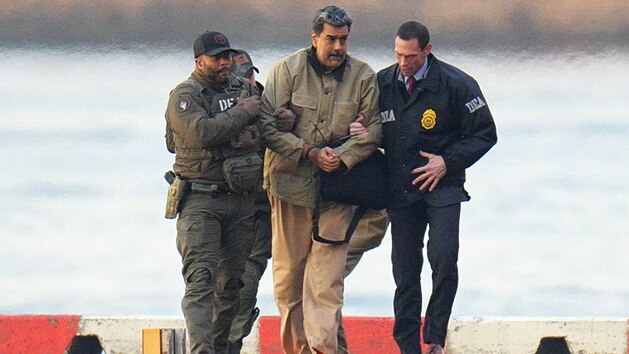

Former Venezuelan President Nicolas Maduro, wife face new charges over alleged torture

Nicolas Maduro is seen in handcuffs after landing at a Manhattan helipad, escorted by heavily armed Federal agents as they make their way into an armored car en route to a Federal courthouse in Manhattan, January 5, 2026 in New York City. (XNY/Star Max/GC Images via Getty Images)

Federal prosecutors in New York on Thursday unsealed new charges against ousted Venezuelan leader Nicolas Maduro that accuse him of conspiring with his wife to torture individuals who were held in Venezuelan prisons.

The new indictment, unsealed in Manhattan federal court, specifically accused his government of torturing Americans because Maduro "assigned blame to the United States for the instability in Venezuela."

Federal prosecutors alleged Maduro "presided over this system of repression and torture" and his wife, Cilia Flores, is accused of helping him develop it.

"When Maduro became President of Venezuela in or about 2013, he authorized the use of torture against specific individuals and oversaw a system designed to use torture, military detention, and violence as a means of repression against the political opposition," the new indictment alleged.

Maduro was charged by superseding indictment with one count of conspiracy to commit torture and Flores was charged with one count of conspiracy to commit torture and one count of narcoterrorism.

"As alleged in the indictment, the Maduro regime subjected over a dozen American citizens to torture while held in custody of the Venezuelan government -- including drugs, electrocution, sexual assault, and more," FBI Director Kash Patel said in a statement. "They will now answer for their crimes."

While leader of Venezuela, Maduro allegedly conspired to torture one American for no reason other than he could be "useful in a prisoner exchange with the United States," according to the new indictment.

An American citizen identified in the indictment as Victim-8 had been in Venezuela visiting family when "officers attacked Victim-8 from behind, severely injuring Victim-8's back such that Victim-8 required a lengthy hospital stay," the superseding indictment alleged. Venezuelan officers allegedly "electrocuted Victim-8's testicles and put a pressure device on his ankles, causing him to faint several times" during transport from the hospital to prison, according to the indictment.

Once in prison, the torture continued, prosecutors alleged. On one occasion, one of Victim-8's torturers told him the only reason he was alive was because he was a United States citizen and, therefore, "Victim-8 could be useful in a prisoner exchange with the United States," according to the indictment.

In 2024, after Maduro declared victory following what the United States called a sham election, Venezuelan authorities allegedly beat an American citizen identified as Victim-9, according to the indictment, which alleged, "For two days they beat him with their fists to the face, head, and stomach approximately every half an hour. The beatings caused permanent injury to Victim-9's eye."

After about a year in custody, Victim-9 was released on Jan. 15, 2026, two weeks after Maduro's ouster, according to the indictment. Still, Victim-9 and other Americans were warned "they were not allowed to say the Venezuelan government had hurt them or had otherwise subjected them to abuse," the indictment said.

In January 2002, an American citizen identified as Victim-7 was detained in Venezuela on charges alleging participation in a conspiracy to assassinate Maduro. Victim-7 was taken to a concrete house where officials "tortured him over the course of two or three days," the indictment stated. "Among other things, the officers punched him in the face and abdomen, covered his face and poured a noxious liquid over his face that caused him to vomit, which the officer then forced him to eat."

From there, Victim-7 was transferred to Boleita Norte prison where, the indictment alleged, his torture continued and "included electric shock to Victim-7's arms, legs and genitals; asphyxiation; beatings; deprivation of food and water; and forced injections of a substance that caused Victim-7 to experience seizures."

Maduro did not appear in court Thursday. Flores appeared on a related matter and the federal judge presiding over the case denied her pretrial release on bail.

"Jail is not a nice place to be, but these are serious allegations," Judge Alvin Hellerstein said. "I don't think the conditions are there to release her."

Defense attorney Mark Donnelly said Flores needs a medical procedure and cannot recuperate in a jail cell. He proposed placing Flores under house arrest with a private security detail.

"The conditions that the defense proposes address all the risk of flight concerns that the government may have," Donnelly said.

Federal prosecutors opposed her release. They accused Flores of "horrific acts" and said "witnesses who were in the room" would testify about the torture she allegedly conspired with her husband to carry out.

Maduro and his wife will be arraigned on the new charges at a later date.

Both previously pleaded not guilty to narcoterrorism and drug trafficking charges and maintained their innocence during their first court appearance in January, following their capture by U.S. forces in a military operation in the Venezuelan capital of Caracas.

Maduro's lawyer argued in a court filing last month that the former president is immune from prosecution because he was the leader of a sovereign nation.

Copyright © 2026, ABC Audio. All rights reserved.


Accused Cornell fraternity member pushes to remove New York AG as special prosecutor over alleged bias

USA, New York, Finger Lakes Region, Ithaca, Cornell University, elevated view of McFaddin Hall, summer (Walter Bibikow/Getty Images)

One of the men accused in a "gang rape" at Cornell University is pushing to have New York Attorney General Letitia James thrown off the case, arguing that she "demonstrated a bias and presumption of guilt" through a past social media post.

An attorney for student Gillio Lopes asked an Albany court to void Gov. Kathy Hochul's appointment of James as special prosecutor in the case, as well as force the appointment of a new prosecutor "who is free from actual or perceived conflicts of interest or bias."   

Lopes' attorney also pushed back on the details of the accusations made by the Jane Doe, saying her story "changed significantly" over time. Doe's lawyer has in turn said those arguments are self-serving.

Hochul appointed James to investigate the case last week after saying she lost confidence in the Cornell University Police Department and the Tompkins County District Attorney, who had previously declined to bring charges in the case 

The legal push to remove James from the case centers on a social media post from last month when James signaled her solidarity with Jane Doe.  

"What this young woman has been forced to endure is horrific and unacceptable. I'm holding her in my heart and in my prayers. To her, and to all survivors: you're not alone. We stand with you," James said on social media on Sept. 28 commenting on a news article about the case.

James declined to comment on the post during a press conference last week.

"I will not comment on a Facebook post," she told reporters. She has not otherwise commented.

But Hochul defended the decision to appoint her. 

"I have every confidence in our attorney general to do what she has always done. Look at the facts, examine the record, and draw the proper conclusions. That's exactly what's going to happen in this case," Hochul said. 

Attorney Andrew Miltenberg, who's representing Lopes, argued in the court filing that James' social media statement about Jane Doe was enough to justify voiding the appointment. 

"Through this official public statement, Attorney General James has made clear that she has formed an opinion about the case, that she believes the allegations made by Jane Doe, and that she has already reached the conclusion that Petitioner and the other named Defendants are guilty," he wrote. 

Thomas Giuffra, the attorney representing Jane Doe, said she was in no condition to consent.

"She was not. Think about it. They were loading her up with ketamine. They were loading her up with -- she was drunk before she walked in the door," Giuffra told ABC News.

Lopes was suspended for one year after being found responsible for participating in the sexual activity when Doe was "incapable of conveying consent," according to Miltenberg.

Lopes was also ordered to take "an educational restorative class" and submit an essay. He has since continued his education at Cornell. 

In an interview with ABC News on Thursday, Miltenberg argued that James' past statement as well as the current public attention on the case makes it impossible for his client to be treated fairly. 

"By saying what she said, posting what she posted several days later, you could reasonably read that as her, Letitia James, having accepted the factual premise of the allegations," he said.  

In the interview with ABC News, Miltenberg pushed back on what he described as "a nonstop barrage" of misleading information about his client. 

"I think that his life and the lives of the other young men has already been destroyed in the court of public opinion," said Miltenberg. "I don't know how he ever overcomes this. He has been absolutely condemned by public opinion on social media, and that's a significant issue." 

Miltenberg pointed to a now-viral exchange when Lopes was accosted on Cornell's campus earlier this month.

"Are you like not embarrassed to be here?"  a woman asked Lopes in the video. "You're a disgusting person. Everyone at Cornell is ashamed of you." 

The case has rocked the university and started conversations about treatment of alleged sexual assault on college campuses.

The woman at the center of the Cornell case, a former student identified only as Jane Doe, originally made a complaint to campus police in November 2024, three weeks after the incident occurred.

The Tompkins County district attorney, Matthew Van Houten, reviewed a summary of the woman's statement that same month and decided based on that information that although the conduct in the case was "morally disturbing," it did not constitute a crime.

Van Houten reopened the case on Sept. 27 after speaking with Jane Doe and her lawyer in the wake of a civil suit being filed alleging that she had been drugged and raped. The men have denied all wrongdoing.

Jane Doe has alleged that Lopes sexually assaulted her and later snorted ketamine from her body. Miltenberg denied the ketamine use and argued that the sexual activity was consensual. 

Miltenberg argued that Jane Doe's account has "morphed almost dramatically" since she first told police about the incident.  

"There is a lot that is in the file that didn't make its way into the civil complaint, which tells a very different story," he said. "I think that the most respectful way for me to say it is that Jane Doe's story has changed significantly since the complaint."

Copyright © 2026, ABC Audio. All rights reserved.
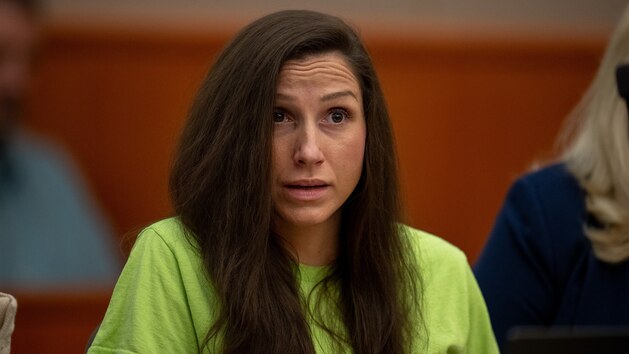

Sheriff, former sheriff charged with obstruction of justice related to Kouri Richins case: Filings

Kouri Richins listens to statements written by her children during her sentencing in 3rd District Court, May 13, 2026, in Park City, Utah. (Trent Nelson/Pool/Getty Images)

A current sheriff and a former sheriff of two Utah counties have been charged with obstruction of justice in connection with the Kouri Richins murder case, according to court filings related to heavily redacted, newly unsealed indictments.

Kouri Richins was found guilty of murdering her husband in March. The high-profile weekslong trial in Summit County followed a yearslong investigation that garnered national attention.

A former Summit County sheriff and the sheriff of neighboring Wasatch County face charges related to Kouri Richins' prosecution, according to defense motions seeking that the indictments be redacted upon release due to the highly publicized murder trial.

Wasatch County Sheriff Jared Rigby was charged with one count of obstruction of justice in a criminal proceeding, a second-degree felony, and one count of making a written false statement, a misdemeanor. The indictment alleges that he made, presented or used a knowingly false item in January "with intent to hinder" a prosecution.

David Edmunds, who served as the sheriff of Summit County from 2003 to 2014, was charged with one count of obstruction of justice in a criminal investigation, a third-degree felony, according to the indictment. The indictment alleges that he provided false information "with intent to hinder" an investigation on March 13.

Both indictments, which were filed last month, were unsealed Wednesday with significant redactions.

According to Rigby's motion, the charges against him "allege interference" in the Kouri Richins case over an anonymous letter postmarked Jan. 10, 2026. The filing does not detail the contents of the letter, who wrote it or to whom it was addressed.

According to Edmunds' motion, the language in his indictment "names the Richins prosecution and connects the anonymous letter to alleged misconduct by a Summit County sheriff's deputy." The indictment accuses Edmunds of making a false statement "intended to hinder identification of the letter's author," the filing states.

Both men have pleaded not guilty, according to ABC Salt Lake City affiliate KTVX.

ABC News has reached out to their attorneys and the Wasatch County Sheriff's Office for comment but did not immediately receive a response. Rigby has previously said he acted lawfully.


$55 million in damages


A Summit County jury found Kouri Richins guilty of fatally poisoning her husband, Eric Richins, with fentanyl in March. Judge Richard Mrazik, who presided over the murder trial, sentenced her to life without parole.

The 36-year-old mother of three, who self-published a children's book on grieving following her husband's death in 2022, is currently seeking a new criminal trial. Her request is under consideration by the Utah Court of Appeals.

This week, Judge Mrazik ordered that she pay more than $55 million in damages to the estate and family members of her late husband in a wrongful death claim.

In his order, Mrazik noted that Kouri Richins did not dispute any of the factual statements in the motion for judgment, which sought an order concluding that she "wrongfully caused" her husband's death.

The judge stated in his order that he concluded from the guilty verdict and the "undisputed record evidence" that Kouri Richins caused her husband's death by poisoning him.

The order includes $10,780,129 in economic damages and $3 million in non-economic damages -- $1 million for each Richins child -- that "seek to compensate wrongful death victims for loss of society, love, companionship, protection, guidance, and affection."

"Eric shared deep, emotional connections with his three minor children, who are the Estate’s only heirs," the order stated. "His death has caused them severe trauma, and it will have permanent effects on each. In addition, by killing Eric, which resulted in her imprisonment, Kouri deprived the minor children of being with their father or their mother."

The order also included $41,340,387 in punitive damages, which were determined by multiplying the economic and non-economic damages by three.

Copyright © 2026, ABC Audio. All rights reserved.
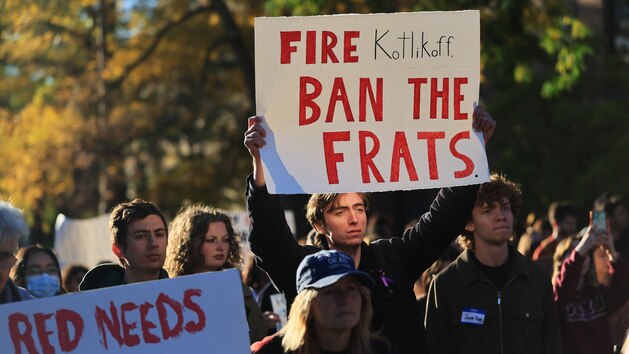

What Jane Doe told Cornell hearing panel about alleged 2024 gang rape

Hundreds of Cornell students participate in a rally against the university's actions after a student was sexually assaulted at a campus fraternity in 2024, October 5, 2026 in Ithaca, New York. (Spencer Platt/Getty Images)

More than seven months after the former Cornell University student known as Jane Doe reported being raped at the school's Chi Phi fraternity house, she gave a university hearing panel a detailed account of the October 2024 incident, saying she was "raped and tormented." 

And she pleaded with the panel to "make Cornell a better and safer place" by removing from campus the men she alleged attacked her, according to school records reviewed by ABC News. 

"I was prostituted, and I was held up like bait for a gaggle of men, and I didn't even know it was happening," Jane Doe testified via teleconference on May 29, 2025, regarding allegations that she had been raped by eight to 10 fraternity brothers. 

Some of the men in the hearing maintained that the sexual encounter, which is now the subject of a criminal investigation, was consensual, but a friend of hers said that she felt that way initially because she was in "shock."

The case has now rocked the university and started conversations about treatment of alleged sexual assault on college campuses across the country.

The Cornell Title IX investigation took place behind closed doors, and the results were not shared with prosecutors in Tompkins County, New York, who had declined to bring charges months earlier. Cornell Police did offer the results of their own investigation, but the local district attorney's office declined to review them, according to police records reviewed by ABC News.

ABC News has reviewed transcripts of the 12-day hearing that shed light on the school's lengthy investigation into the incident, as Jane Doe and the men she accused offered drastically different accounts of that evening. The seven men accused in the incident have denied all wrongdoing. 

Jane Doe told the panel that she was barely "halfway through the process of understanding what happened" to her --- but knew enough about the evening to ask the panel to take action against the fraternity members. 

"I remember being coerced into using ketamine. I remember several respondents running a train on me, many different times. And I remember a dark room with shadows of men in and out constantly, and I remember feeling like there was a joke and I was not in on it," said Jane Doe, who told police she was intoxicated that evening from a prior event, but alleges that she was pressured to drink and consume ketamine at the house. 

The men she accused offered a different account of the evening, arguing that the incident was either consensual, or distancing themselves from the encounter. 

"The truth is that [Jane] may have regrets about that night, as do I, but those regrets do not amount to sexual assault or sexual exploitation," said one of the men. 

Some of the men argued they only walked into the room without engaging in the drug use or sexual acts. One Chi Phi brother said, "I was in the room where it happened that night, but not when it happened." 

During her statement to the panel, Doe acknowledged the gaps in her memory -- "I will never know everything that happened to me, and I know I've said that a lot," she said -- and sought to explain why some of her initial communications with the men after the incident appeared friendly. 

"I'm open-minded, and thoughtful, and empathetic," she said, according to the records. "But for two or three weeks following the event, those qualities protected the [men]. I didn't want to believe something terrible could happen to me." 

One of Jane Doe's friends told the panel that Jane Doe's initial reaction that the incident may have been consensual was because "she was in a little bit of shock at the beginning," according to school records reviewed by ABC News.  

"I believe personally that she was such in shock that she was just trying to make everything okay and maybe kind of a people pleaser at that point," the friend testified. "But I knew she was uncomfortable as soon as I saw her on that Monday and that she wasn't okay with what happened and maybe embarrassed." 

Some of the fraternity brothers pushed back on Jane Doe's assessment of the evening, arguing that she consented to the activity and only changed her account after rumors of the incident spread across Cornell's campus. 

"The complainant's words and actions demonstrated affirmative consent to each action we engaged in," one brother said. "What is highly possible here is that the complainant initiated this [investigation] ... due to the public perception of the event and rumors that arose after the issuance of the crime alert." 

Some of the brothers who alleged they did not participate in the sex acts -- but were briefly present in the room -- argued they were being unfairly punished. 

"It is clear [Jane Doe ] was upset and felt wronged, and some or even all of her frustration may be valid. But instead of being born from facts and truths, [Jane Doe's] statements show both a desire and need to hold all members accountable, regardless of their specific actions," said one brother. 

At the end of the 12-day hearing, Jane Doe told the panel that the incident ultimately changed her view of Cornell, from what was once her dream school to the place where she was "raped and tormented," according to the records.  

"I ask the panel to please make it safer for those that I love and the community at large, and to remove those boys from the campus," she said. "I will not be there to see the change, but removing these respondents will make Cornell a better and safer place." 

The panel issued their decision about the incident three months later, expelling two of the students allegedly involved in the incident and suspending two other students. 

Jane Doe withdrew from Cornell due to the incident, according to her attorney, and has filed a civil suit in the case. None of the men named in the suit have responded in court, although each has denied wrongdoing to investigators, in public statements, or through their lawyers.

New York Attorney General Letitia James is conducting an investigation into the incident, and on Tuesday, Cornell's board of trustees announced it had tapped the law firm King & Spalding to conduct an independent probe, led by former acting U.S. attorney general Sally Yates.

Copyright © 2026, ABC Audio. All rights reserved.


Judge grants motion to preserve evidence in Christa Pike's botched execution

(Getty Images stock photo)

A Tennessee judge granted a motion to preserve relevant evidence in the botched execution of Christa Pike.

The lone woman on Tennessee's death row survived being administered two lethal doses of pentobarbital and remains hospitalized following the failed Sept. 30 execution in Nashville, her attorneys said.

Pike was sentenced to death after being convicted of the 1995 murder of 19-year-old Colleen Slemmer. Her attempted execution by lethal injection came after a series of last-minute legal challenges.

Pike's attorneys had filed an emergency motion in Davidson County Chancery Court last week seeking an order requiring the Tennessee Department of Correction (TDOC) to protect and preserve "any and all evidence related" related to the execution attempt, which they allege was "cruel and unusual punishment."

"In light of the manifest violation of Ms. Pike's constitutional rights, the actionable nature of that violation, and the reasonable foreseeability of litigation, the Defendants have an affirmative duty to preserve all relevant physical, written, and electronic evidence," the filing stated.

Following arguments from Pike's attorney and the state, Chancellor I’Ashea Myles granted the motion.

"This case is unique, to say the least," she said. "In light of the evolving situation, the court will pen and grant its own order, granting the motion to preserve relevant evidence."

The evidence ordered preserved and maintained includes all photographs, video recordings, audio recordings and surveillance footage of the execution; all drugs, syringes, IV lines and tubing that are in the state's possession; and all handwritten notes and logs, checklists, timelines, incident report and witness accounts.

She also included all communications regarding the execution and
"anything concerning the deviation" from protocol and "anything concerning any complications, delays, equipment issues, anything in regards to the ability to access veins -- just the administration of this particular execution. It needs to all be maintained."

Wednesday's hearing came a day after Pike's attorneys said she regained consciousness after the failed execution left her critically injured and temporarily on a ventilator. During the hearing, one of Pike's attorneys, Luke Ihnen with the Federal Defender Services of Eastern Tennessee, told the court that she is "speaking limitedly."

During arguments on preserving evidence from the botched execution, Ihnen told the court, "We don't know what they have because they won't tell us, and so the preservation order seeks the broadest possible preservation of evidence."

"Everything they have in their possession should be preserved," he said.

"Before yesterday, we didn't know if Miss Pike was ever going to regain consciousness or speak. She has, and so we've come to this court," Ihnen said. "We didn't have a reason to visit our client until yesterday, and so you know, it's evolving for all of us, and TDOC has continued to put up these barriers to access."

Assistant Attorney General for the State of Tennessee Will Ayers told the court that the state is working with Pike's counsel to ensure that she is able to "get the evidence that they believe they're entitled to" and that TDOC has already been instructed to preserve evidence that is covered under a federal case involving another Tennessee death row inmate.

"TDOC has advised us that evidence, physical evidence, was collected from the execution chamber on the night of September 30th, and has been logged into a preservation room," Ayers told the court. "Among the things collected are logbooks, observation logs, medical waste and products, EKG readouts."

Ayers said there are some items that may not be in TDOC's possession, such as portions of the IV lines.

"There may be portions of those IV lines that could have been still attached to Miss Pike when she was transported to the hospital," he said.

In issuing her order, Myles said she will not rely on the federal case cited by the state.

"To any extent that any information or any evidence has already been discarded, deleted, destroyed or no longer exists, I want TDOC to take an affirmative step to try to claw back that information and put in policies and procedures while this litigation is pending to ensure that no information is discarded and/or destroyed," she said.

According to the motion filed by Pike's attorneys, Pike "could be heard crying, whimpering, and breathing loudly" while being administered two lethal doses of pentobarbital, at one point stating that her arm "feels like it's about to burst open." At least seven needles were used to gain IV access, with one "bent in a 90-degree angle when it was removed," the motion stated.

The motion described pentobarbital, a sedating medication, as being "caustic and highly alkaline" and that it "burns upon contact." Both of Pike's arms were "swollen, burned, and blistered" when she arrived at a Nashville-area hospital, the motion stated.

Pike had raised concerns about a lethal injection in a complaint filed months prior to her scheduled execution, arguing that her "thrombocytosis, post-traumatic stress disorder and small veins 'make it sure or very likely that there is a substantial risk that she will experience unnecessary and superadded pain and suffering, terror, and disgrace,'" the motion stated.

Ihnen said during Wednesday's hearing that "based on what we know about Miss Pike's current condition, these allegations that were made in the complaint certainly appear to be at least related to the botched execution."

Asked directly by Chancellor Myles at one point if he can answer whether Pike's execution will be rescheduled, Ayers said he is not in a position to answer that.

In an update Tuesday, Pike's attorneys said she was conscious and speaking, alling her recovery "medically unprecedented."

"Her prognosis remains unclear but, at a minimum, we expect a long recovery," her attorneys -- Ihnen, as well as Randy Spivey and Kelly Gleason from the Tennessee Office of the Post Conviction Defender and Stephen Ferrell from the Federal Defender Services of Eastern Tennessee -- said in a statement.

TDOC confirmed Tuesday that Pike remains hospitalized but said it could not provide details of her medical condition due to federal privacy laws.

In the wake of the botched execution, TDOC said that it "followed every step of the State's lawful, established execution protocol approved by the Attorney General's Office."

"The lethal injection chemical in the protocol has consistently been effective, and the protocol does not allow for additional procedures beyond what was carried out [that] evening," the statement continued.

Pike's attorneys said Tuesday they continue to ask Tennessee Gov. Bill Lee to commute her sentence to life imprisonment without the possibility of parole.

She is the first person reported to have survived lethal injection after being given medications, according to the Death Penalty Information Center, whose executive director referred to the failed attempt as "the worst we've ever seen and unlike any other botched execution in the modern era."

In the wake of the botched execution, Gov. Lee ordered a temporary halt to scheduled executions in the state and TDOC Commissioner Frank Strada resigned.

The governor's office said in a statement that it has also appointed former U.S. Attorney Ed Stanton to conduct an independent review of TDOC's execution attempt that "will seek to determine whether the protocol was followed and consider whether additional recommendations are necessary to ensure the State's protocol continues to be lawful and effective."

"The State previously retained Stanton in 2022 to conduct an independent review of Tennessee's lethal injection protocol. His work prompted the State and Attorney General's Office to substantially rewrite the protocol before executions resumed," the statement further said.

The botched execution comes after Tennessee's planned execution of Tony Carruthers in May had to be halted after authorities were unable to find a suitable vein to place an IV to administer the injection after trying for over an hour, his attorneys said at the time. Gov. Lee granted Carruthers a one-year reprieve. 

Copyright © 2026, ABC Audio. All rights reserved.
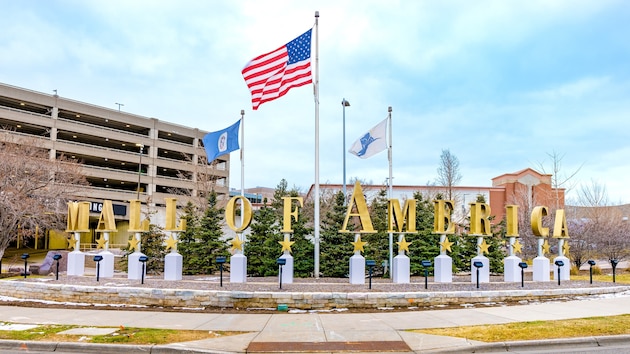

Man arrested in foiled ISIS-inspired mass shooting plot at Mall of America, US authorities say

A general view of the Mall of America on Jan. 4, 2024, in Bloomington, Minnesota. (Aaronp/bauer-griffin/GC Images/Getty Images)

Federal authorities have arrested a man accused of planning to carry out an ISIS-inspired mass shooting at the Mall of America in Minnesota, according to newly unsealed court records. 

Sheikhdoon Mohamud was taken into custody Tuesday after allegedly purchasing an AK-47 and 200 rounds of ammunition from a confidential source for the FBI that prosecutors say he planned to use to attack a festival taking place at the Mall of America. 

Mohamud has been under investigation by the FBI since December 2024 when a confidential source with the FBI began exchanging messages with him about either traveling to Somalia to fight on behalf of al-Shabaab or carrying out a mass casualty attack on U.S. soil, court documents show. 

Prosecutors detail scores of communications between Mohamud and the FBI source where he allegedly detailed his hopes of martyrdom, including one where he discussed just getting a "gun here and just start killing a bunch of white ppl." 

By December 2025, Mohamud expressed interest in providing support to ISIS and the two regularly continued communicating as Mohamud shifted away from plans to travel overseas and instead indicated he was more intent on carrying out an attack in the U.S, the court documents allege. Throughout their communications, Mohamud allegedly suggested he had inspiration in his planned attacks from both the New Orleans New Years Eve attacker and Omar Mateen, the Pulse Nightclub shooter. 

Prosecutors said Mohamud told the source he wanted to attack the Mall of America "because its owned by jewish" people, adding, "so if I kill even 30 people noone would go there anymore." 

By August, Mohamud allegedly began planning a meetup with the source to purchase an AK-47 and ammunition, and Mohamud sent the following pictures of himself so the source could recognize him, prosecutors said.

Mohamud later allegedly settled on a meetup of Oct. 6 with the source to purchase the weapons and suggested he would plan to carry an attack on Oct. 24 targeting the Hmong Arts Celebration at the Mall of America, according to court documents. 

During their meetup the undercover agent handed Mohamud a large duffel bag containing an AK-47 rifle and four magazines as well as a container with 200 rounds of ammunition, according to prosecutors.

The agent told Mohamud he was a member of ISIS and when he asked him about his attack plans, Mohamud again allegedly expressed intent to carry out a shooting at a festival at the Mall, and said part of his motivation was that he believed it was owned by Jews and that he was "angry at the bad treatment of Muslims" in the wake of the May attack on an Islamic Center in San Diego. 

Upon exiting the vehicle, Mohamud was taken into custody at gunpoint by FBI agents, the affidavit says. 

"The American people and the citizens of Minnesota should know from yesterday's arrest -- which was the culmination of an outstanding law enforcement and intelligence operation -- that federal law enforcement is standing up to their calling to protect us," U.S. attorney for Minnesota Dan Rosen said Wednesday. "Here, because of their vigilance and diligence, they were able to detect the threat and disrupt it before the defendant carried out his intention to kill, in his words, 'maybe 30 to 60 people,' as we allege in far greater detail in the complaint."

Rosen and FBI special agent Christopher Dodson detailed the extensive communications between Mohamud and an FBI confidential source that they said showed he was "100% committed" to carrying out an attack. 

"The messages this defendant allegedly sent to others were chilling," Dodson said. "They show the idolization of ideologically motivated violence, a callous disregard for the sanctity of human life, a blind hatred of people of other faiths, and a cold commitment to carrying out his vision of violence in our community."

Mohamud is believed to be an American citizen born in the United States, Rosen told reporters, though in the criminal complaint he refers to Somalia as the homeland of his parents. 

Rosen noted that in 2025 after being alerted to his sharing of extremist material online, the FBI actually went to Mohamud's house to attempt to speak to his parents but were rebuffed. 

"I just would say to parents all over Minnesota -- for that matter, all over America: If you get the indication, especially if you hear from federal law enforcement that your son or daughter is being radicalized to the point where federal law law enforcement wants to come and give you that warning, those are warnings that ought to be heeded," Rosen said. 

Copyright © 2026, ABC Audio. All rights reserved.


Haverford College professor arrested, charged after online attacks, school president says

Haverford College Campus. (John Greim/LightRocket via Getty Images)

A Haverford College professor was arrested and charged with online harassment and intimidation, the school's president said in a statement Tuesday.

The professor, Guangtian Ha, has been placed on administrative leave and is "barred from campus while the criminal process moves forward," according to the message from Haverford College President Wendy Raymond.

The president said representatives from the school, which is located in Haverford, Pennsylvania, have contacted those targeted "by these heinous online attacks, which were antisemitic in nature."

An indictment filed Sept. 30 in the Eastern District of Pennsylvania district court alleges that between around Oct. 9, 2025, and May 20, 2026, Ha sent around 50 messages to a victim "using at least four different X accounts."

Several examples of messages included in the indictment involve threatening, antisemitic language, the indictment said.

Ha, a professor of religion at the school, was on sabbatical leave and not teaching this year, according to the president's message.

"I am deeply distressed by these allegations and want to state in the plainest of terms that any form of harassment or discrimination based on identity is unacceptable, antithetical to our values, and has no place at Haverford," Raymond said in the statement.

Raymond added, "This disturbing news is made even more harmful for many given its proximity to both the Jewish High Holidays and the third anniversary of the October 7 attacks."

The president ended her message offering resources of support and encouraging "anyone who experiences bias" to report it.

ABC News has not yet identified an attorney for Ha.

Copyright © 2026, ABC Audio. All rights reserved.


Utah medical company announces 'AI-powered prescriptions'

(Getty Images stock photo)

A Utah health care company announced Monday that it has received state authorization for a pilot program allowing artificial intelligence to issue initial prescriptions, including acne treatment.

Nolla Health introduced the program in a blog post announcing the "AI-powered prescriptions," its acne treatment prescription process, which will roll out in three stages.

The company said the pilot is the first in the U.S. authorized by a state regulator to allow AI to issue initial prescriptions, and that it was authorized after working with the Utah Office of Artificial Intelligence Policy.

The company says the program is designed to close "the access gap" to healthcare, in this case, by avoiding the appointment wait times and costs associated with visiting a dermatologist. 

The company said the Nolla Derm application "will prescribe effective acne treatment from $4.99 a month" and require "no office visit."

The post said Utah residents 18 and older can download the app and begin the process at a discounted rate of $4.99 per month.

After verifying their identity, providing informed consent and filling out an intake questionnaire, patients take a “quick five-angle face scan.”

"In about 10–15 minutes, this generates a personalized treatment plan and, if appropriate, an initial prescription," the post said.

The pilot will roll out in three stages with physician involvement in each, according to the company.

In the first stage, which includes the first 100 patients, "two licensed physicians independently review and approve every AI-generated prescription before it reaches the patient."

In the second stage, which will include up to 500 patients, “Nolla Derm issues prescriptions directly, and a physician reviews every case after the fact, at least weekly.”

In the third stage of the pilot, a 10% sample of prescriptions each month will be reviewed by a physician. A physician will also review "every case involving an escalation or a side effect."

The company said stages one and two would last at least four and eight weeks, respectively.

"Moving to the next stage requires meeting safety targets, including 95% agreement with physicians and zero serious adverse events, and written approval from the state," the post said.

The post continued, "Patients can message a licensed physician through the app at any time, at no extra cost."

The company said acne treatment was a viable starting point for the technology because it is “well understood, low risk, and backed by decades of clinical evidence.”

Copyright © 2026, ABC Audio. All rights reserved.

Missing University of Maryland student found 'disoriented' in the woods: Police

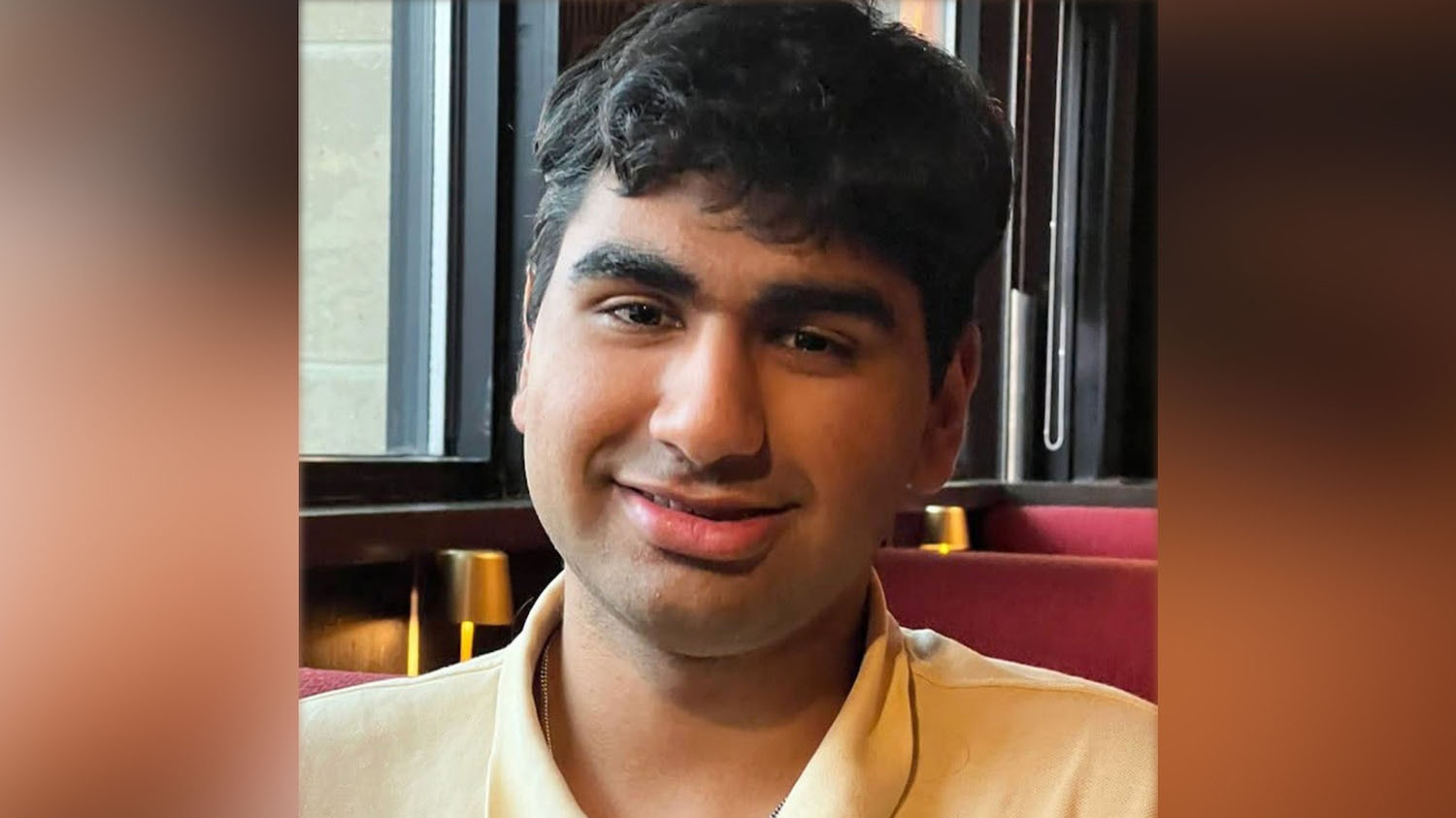
Dilan Ashar is seen in this undated image. (University of Maryland Police Department)

University of Maryland student Dilan Shaan Ashar, who had been missing since Oct. 2, was found "disoriented" and "dehydrated" in the woods on Wednesday by campus police six days after he went missing.

University of Maryland Chief of Police David Mitchell said during a press conference on Thursday that the 22-year-old was located as they canvassed a wooded area in the surrounding College Park community at about 7:30 pm local time.

"Dilan came in from the cold," he said. "He was dehydrated. He was disoriented. We know he was very hungry, and you can imagine after six days in the woods, what this young man went through."

Mitchell said that law enforcement called for "immediate medical attention," and first responders treated Ashar for dehydration and then transported him to a nearby hospital.

"We were able to reunify Dilan with his parents. And as I stood at the ambulance and I saw his mother and father and brother, and I was standing with [UMD] President Pines when Dilan saw his mother and his family, it's hard to put into words how touched he was, and how touched that family was."

His mother, Binita Ashar, shared an update on her personal Facebook page, celebrating her son's return home.

"Elated to report that we have been reunited with Dilan! Heartfelt gratitude for all of your texts, posts, calls, prayers, well wishes and overwhelming support. Feeling very fortunate and thankful," she wrote on Wednesday night.

University of Maryland President Darryll Pines thanked law enforcement, students, faculty and staff for their support in the search for Ashar.

"I want to thank our students and the entire University of Maryland community for their compassion, and their understanding in demonstrating their care," he said.

Pines added that students proposed a plan to display a large sign on campus, saying "Welcome home Dilan," which he has approved.

Ashar was found one day after his mother issued an emotional plea to the community for help as campus police searched for her son.

"Dilan is a kind, thoughtful young man who cares deeply about people. He loves sports and he loves to cook," Binita Ashar, who was joined by his father and brother, said in the recorded message, which was released on the UMD police's YouTube page on Tuesday.

Officials previously said that Ashar was last seen on Friday, Oct. 2, at about 2:30 am local time at the Terrapin Trail Garage near the Xfinity Center in College Park, Maryland.

Police released two photos of Ashar, including one that was captured through surveillance footage of him leaving his residence at approximately 2 a.m. on the day he was last seen.

Police said several searches were been conducted around Terrapin Trail Garage, using drones, K-9 units, cadaver dogs and dozens of first responders, according to police. The searches covered surrounding areas like the university golf course, parking garages, wood lines, Lake Artemesia and nearby parks, officials said.

Copyright © 2026, ABC Audio. All rights reserved.


72-year-old hiker missing for days in California forest found alive

Mary Beth Granbery, 72, was found alive on Sunday, Oct. 4, 2026, in Shasta County, Calif., after she went missing for days while on a camping trip. (Siskiyou County Sheriff’s Office)

A 72-year-old hiker who had sustained significant injuries was found alive in a northern California forest Sunday after she had been missing for multiple days, officials said.

Mary Beth Granbery was reported missing on Friday, Oct. 2 after she departed for a multi-day camping trip on Sept. 28 at Cabin Creek Trailhead in Shasta County, California, but did not return to work that Friday, according to the Siskiyou County Sheriff's Office.

Siskiyou County Sheriff's Office and Shasta County Sheriff's Office launched a joint search and rescue operation on Saturday with help from volunteers and California Highway Patrol Air Operations, according to the agencies.

Granbery was located on Sunday at the bottom of a steep embankment with multiple significant injuries from a fall and from exposure, and was airlifted to a medical center to receive treatment, Siskiyou County Sheriff's Office said.

Officials had located Granbery's camper van on Saturday at a nearby trailhead, the sheriff's office said.

Granbery was reunited safely with her loved ones, who helped with search and rescue operations and provided critical information to help locate her, the sheriff's office said.

The search area included steep terrain, creeks, trail debris and downed trees, according to the Shasta County Search and Rescue Jeep Patrol.

Officials reminded the public to inform someone of your departure and expected time of return when setting out for a trip, and to stay in place if lost so as not to expand the search area unnecessarily.

Copyright © 2026, ABC Audio. All rights reserved.

Cornell police pressed fraternity members on how they knew alleged sex was 'consensual'

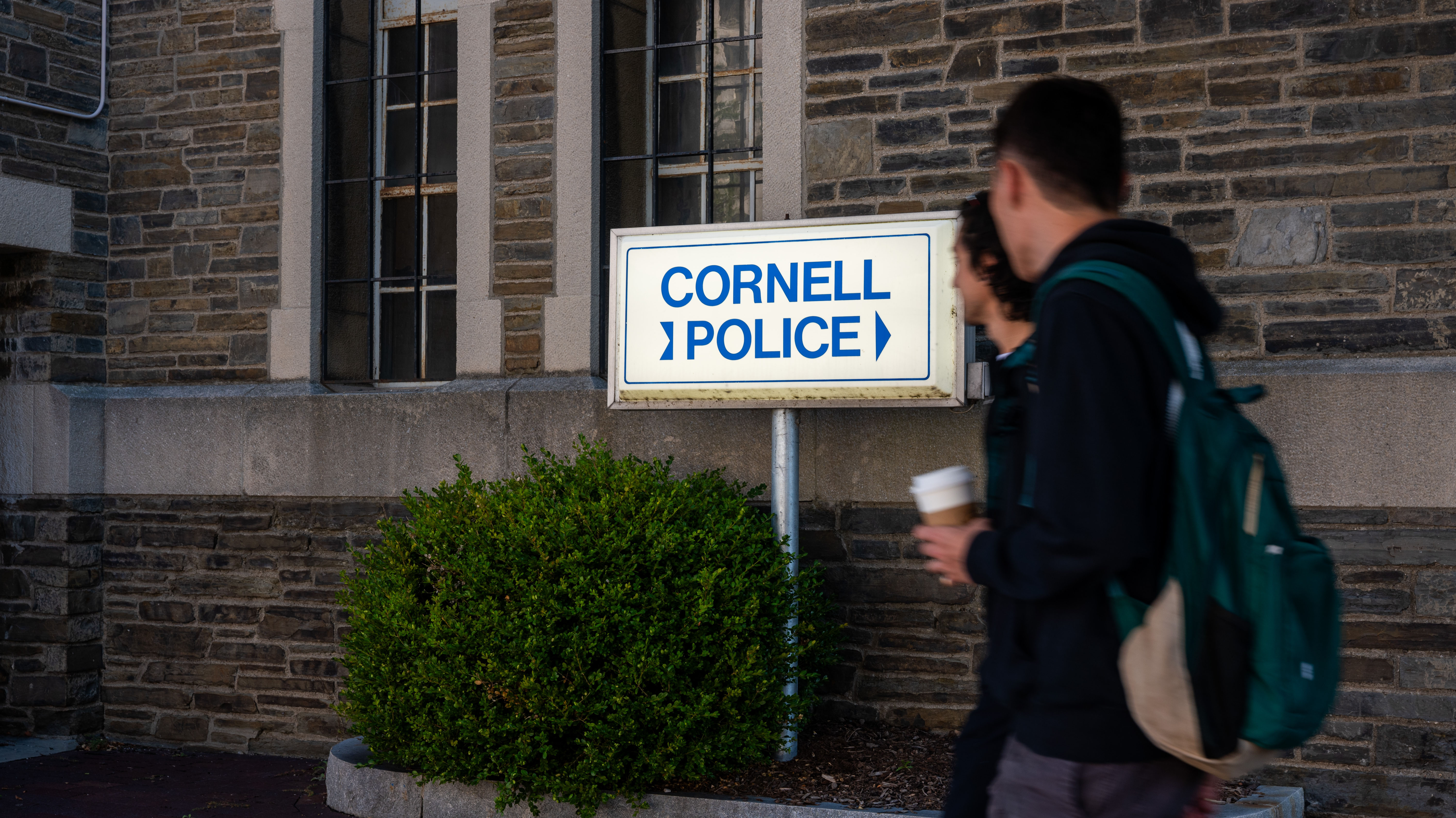
Students walk past Cornell Police headquarters on the Cornell University campus on Sept. 30, 2026, in Ithaca, New York. (Spencer Platt/Getty Images)

Two investigations are underway into a former Cornell University student's allegations that she was raped at a fraternity house in 2024 -- one to determine whether criminal charges should be brought and another to examine how the university handled her case.

Newly obtained videos reviewed by ABC News show members of Cornell's Chi Phi fraternity being questioned by university police in the weeks after the alleged assault.

One of the video shows Chi Phi members who were allegedly in the house that night, but not involved in the group sex, telling Cornell University police they heard it was all consensual.

One fraternity member told police in the video that "what people were saying was that there was like multiple consenting adults in this room."

Another told investigators that "the general rumor that was going around was that it was a ... consensual thing."

The investigator subsequently appeared to question how the fraternity members could possibly know the encounters were consensual.

"Dude. I was a college kid,” the officer said. “I get it. I'm like, in college, I wouldn't have been like, 'Oh, that was a sick consensual act last night.'"

"I guess where -- how do they know it was consensual?" the officer questioned.

The fraternity member said he could not recall exactly what had been said but that he believed the men had told others they had sex with the woman.

“I can't recall exactly what was said, but yeah, I mean, they … they said that they had sex with her, I guess,” the fraternity member said.

The officer pressed him on his inability to identify the fraternity members who were there.

"I just get worried because you know how it looks," the officer said. "You're a brother."

The fraternity member responded that he could not recall everyone who had been in the room but that he remembered Jane Doe in bed talking to people but did not recall names.

“I didn't know exactly what she was doing, no,” the fraternity member said. “I can't recall exactly everyone who was in there, and like I said before, I don't want to make -- I don't want to make assumptions based on what I don't remember.”

Months later, Jane Doe testified before a Cornell panel, according to a transcript of that testimony obtained by ABC News, where she was unequivocal about what happened that night.

"I was prostituted and I was held up like bait for a gaggle of men," she said. "I remember a dark room with shadows of men in and out constantly. And I remember feeling like there was a joke and I was not in on it."

She ended her testimony with a plea to Cornell, saying, “Please make it safer for those I love and the community at large ... remove those boys from campus."

Cornell later expelled two students and suspended two others but has now brought in former U.S. Deputy Attorney General Sally Yates to lead an independent review of the university's handling of the allegations.

Yates will review how Cornell prevents and responds to sexual harassment, sexual assault and related misconduct, including the university's investigative and disciplinary processes, campus police response and oversight of fraternities, sororities and other student organizations.

Copyright © 2026, ABC Audio. All rights reserved.


9/11 families to seek release of documents they say include Saudi Arabia's link to attack

Getty Images / Stock Image

Families of Sept. 11 victims are expected to ask a federal appeals court on Wednesday to order the government to release documents that they say tie the Saudi Arabian government to the plot to hijack airplanes and crash them into New York and D.C.

With past presidents in attendance at this year’s 9/11 commemoration in New York, several family members openly faulted the U.S. government for keeping these materials secret.

"Administration after administration, including leaders in front of us here today, chose to protect the Saudis instead of standing with the 9/11 families," Terry Strada, the widow of 9/11 victim Tom Strada, said during the ceremony.

Evidence released so far as part of a lawsuit traces the activities of Omar al Bayoumi, a Saudi national who had been living in California. The families say he was a Saudi intelligence asset who assisted at least two of the hijackers.

Many of the 9/11 hijackers were Saudi nationals, according to the FBI, along with a few others from the United Arab Emirates, Egypt and Lebanon.

The Saudis have repeatedly denied having any role in facilitating the attacks and replied in court that they remain "an ally of the United States [and] a sworn enemy of Al Qaeda."

The decision on whether to declassify additional records ultimately lies with President Donald Trump, whose administration has touted government transparency.

A White House spokesperson told ABC News last month that "President Trump is leading the most transparent administration in history, and his team is working diligently to identify records that are responsive to these families' request."

Copyright © 2026, ABC Audio. All rights reserved.


Tropical Storm Isaias forecast to make landfall as hurricane Friday

Getty Images / Stock Image

Tropical Storm Isaias, which is churning hundreds of miles south of the Gulf Coast, is expected to rapidly strengthen in the next 24 to 48 hours before making landfall on Friday as a hurricane.

The storm on Wednesday morning was about 580 miles south of the Mississippi River. It may become the first Atlantic hurricane of the season, the latest first hurricane on record, on Thursday.

Rain from Isaias may reach the New Orleans-to-Pensacola region along the Gulf Coast on Friday morning, bringing with it potentially tropical-storm-force winds.

This is a developing story. Please check back for updates.

Copyright © 2026, ABC Audio. All rights reserved.

Army sets date for Fort Hood mass shooter Nidal Hasan to face firing squad

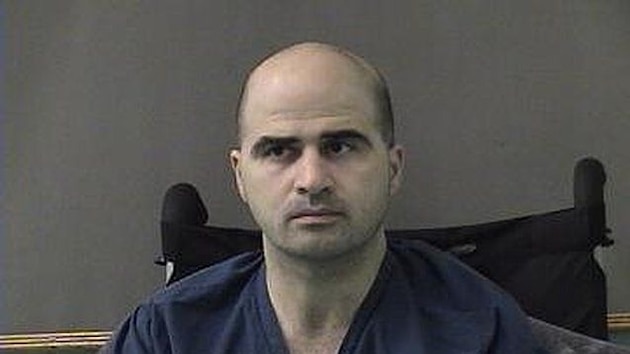
In this photo released by the Bell County Sheriff's Office, U.S. Maj. Nidal Hasan, the Army psychiatrist who is charged with murder in the Fort Hood shootings, is seen in a booking photo after being moved to the Bell County Jail on April 9, 2010 in Belton, Texas. Hasan was transferred early April 9, 2010 from Brooke Army Medical Center in San Antonio to Bell County Jail in Belton, Texas. (Handout/Getty Images)

Nidal Hasan, who was sentenced to death for the 2009 mass shooting at Fort Hood, Texas, will be executed by firing squad on Dec. 3, according to a memo from the acting Army secretary.

The execution, the first carried out by the U.S. military in more than 60 years, is scheduled for 1 p.m. CT, according to the memo issued Tuesday by acting Army Secretary Adam Telle.

The Pentagon announced Monday that Hasan would be executed by firing squad after President Donald Trump approved the decision Friday.

Under the military’s execution process for prisoners on death row, the Army secretary initiates the proceedings, which then require approval from the defense secretary and eventually the president.

Under Army policy, executions must happen within 150 days of the president approving it, but no sooner than 60 days.

The military has not executed a service member since 1961, when Pvt. John Bennett was put to death after being convicted of the rape and attempted murder of an 11-year-old girl in Austria.

On Nov. 5, 2009, Hasan, then an Army psychiatrist, opened fire at the Soldier Readiness Processing Center at the Fort Hood military base, killing 12 soldiers and one civilian before he was shot, severely wounded and arrested.

Hasan was convicted of 13 counts of premeditated murder and 32 counts of attempted murder and sentenced to death in 2013. He was sent to a military detention center at Fort Leavenworth in Kansas.

He is one of four death row inmates in the Army justice system.

The announcement of his execution comes after ABC News reported in June that the Army had been planning military executions, according to internal documents and officials familiar with the matter.

Army regulation dictates that at least two media outlets should be selected to witness the execution. 

Copyright © 2026, ABC Audio. All rights reserved.

Couple arrested in connection with alleged abuse of surrogate-born children: 'Horrific'

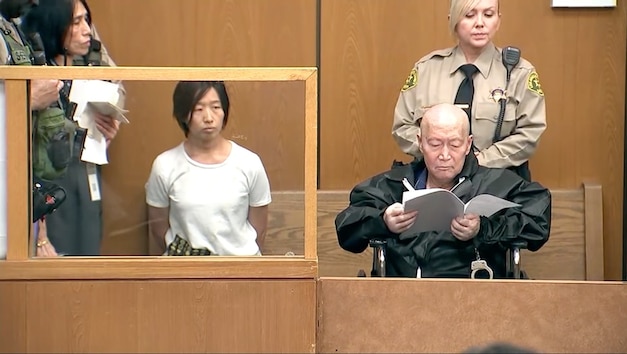
Silvia Zhang, left, and Guojun Xuan appear in a Los Angeles County courtroom for their arraignment, Oct. 6, 2026. (KABC)

A California couple faces multiple felony charges in what prosecutors called an unprecedented case of child abuse involving over a dozen children born via surrogacy in their Los Angeles County mansion.

Husband-and-wife Guojun Xuan, 66, and Silvia Zhang, 39, were arrested at their Arcadia residence on Tuesday following a 17-month investigation, according to the Los Angeles County sheriff.

Prosecutors allege that the couple ran a "house of horrors" where multiple live-in nannies physically abused at least 15 children -- including 14 born via surrogacy -- at their encouragement. Some were as young as 2 months old at the time, according to prosecutors.

The two allegedly watched the punishment through a system of 32 motion-activated cameras inside the mansion, at times laughing, according to prosecutors. Xuan is also accused of committing child abuse, with prosecutors alleging that he instructed a nanny to strike one of the children harder before joining in and repeatedly striking the child's bare buttocks and head.

"This case is unprecedented, it is horrific, and the physical abuse, beating and punishment that these very young children received is despicable," Los Angeles County District Attorney Nathan Hochman said at a press briefing Tuesday announcing the arrests and charges against the parents.

The couple are both charged with conspiracy to commit child abuse, according to the complaint. Xuan is also charged with child abuse under circumstances or conditions likely to cause great bodily injury or death, according to the complaint.

One of the couple's nannies was previously charged with child abuse in connection with the case and has an active warrant for her arrest, prosecutors said.

An attorney for Xuan denied the allegations against his client.

"My client is innocent," the husband's attorney, Mitchell Krems, said in a statement. "It is the nanny's wrongdoing who went on the run. He is being targeted for exercising his constitutional right to have a large family."

Krems also denied the allegations against Zhang while speaking with reporters after appearing in court Tuesday on behalf of her attorney and claimed that the two are being treated unfairly.

The investigation began in May 2025, when Zhang brought one of the children -- a 2-month-old boy -- to the hospital for a head injury, according to Los Angeles County Sheriff Robert Luna.

"She appeared to be untruthful with hospital staff about how the injury was sustained, and the hospital staff notified law enforcement authorities," Luna said during the press briefing.

Before Arcadia police responded to their home on May 7, 2025, Xuan and Zhang allegedly instructed some of the children to deny they had been beaten, and Zhang allegedly told a nanny to hide sticks used to strike the children, according to the complaint.

Investigators found 14 children born via surrogates between the ages of 2 months and approximately 4 to 5 years old living at the Arcadia house at the time, along with two other children, according to Hochman. There were also an additional five children who were part of the "initial surrogacy operation," he said. Prosecutors did not say where those children were at the time.

The couple had set up "learning centers" in three rooms in the mansion, where children spent hours each day seated at desks while being supervised by the nannies, according to Hochman. Zhang maintained a spreadsheet to track the 21 children, and she and her husband would watch live CCTV feeds from throughout their residence on a large television screen in their shared office, according to the complaint.

"Each one of these defendants monitored the nannies' discipline of the children that were happening in the three learning centers. And what was going on, has been alleged in the complaint of that discipline, is nothing short of absolute physical abuse, beatings, and punishment on a daily basis," Hochman said.

The cameras allegedly captured some of the nannies spanking, slapping or hitting the children between April 27, 2025, and May 7, 2025, according to prosecutors. In one instance cited in the complaint, Xuan was allegedly captured beating a child "with sufficient force that the child's body lurched in alternating directions with the blows."

One room within their residence did not have a camera, according to the complaint, which alleged that "one or more uncharged coconspirator nannies were captured on surveillance carrying children into this room, where the children could be heard screaming from inside."

In the incident that led to the investigation, on May 4, 2025, one of the nannies -- Chunmei Li -- allegedly struck a 2-month-old boy named Walter in the head, according to the complaint. Two days later, Zhang brought the baby to a hospital, where she allegedly misrepresented to the hospital staff that he had sustained the head injury by falling off a bed the day before, according to the complaint.

Li was previously charged with one felony count of child abuse under conditions likely to cause great bodily injury or death and remains at large, Hochman said. Xuan and Zhang both face an additional charge of accessory after the fact, which alleges that they harbored, concealed and aided Li to prevent her arrest.

The couple was also charged with multiple counts of preventing or dissuading a witness or victim from reporting a crime, according to the complaint.

They both pleaded not guilty during their arraignment Tuesday afternoon and denied all allegations. Their bail was set at $20 million for each defendant.

Prosecutors had requested $100 million bail for each, which Hochman said was "in recognition of both the flight risk potential in this case, as well as the serious nature of these charges and the defendant's means as well."

If convicted, they face maximum prison sentences of 17 years and four months for Xuan and 11 years and eight months for Zhang, prosecutors said. Li faces up to 12 years if convicted.

No other nannies have been charged in the case.

The children have been under the care of the Los Angeles County Department of Children and Family Services since May 2025, Hochman said. The parentage of and motivation for having the surrogate children is part of the ongoing investigation, he said.

According to the complaint, the couple founded a surrogacy company in 2021 that they operated from their Arcadia residence to hire surrogates throughout the United States. To obtain children through surrogacy, the couple allegedly provided false information to prospective and actual surrogates, according to prosecutors. Among the allegations, one surrogate was told that Zhang was a single mother struggling to conceive, while another was told the couple had only one daughter, according to the complaint.

Krems told ABC News Los Angeles station KABC that Xuan wanted to have so many children out of a sense of "altruism."

"The reason he has all these children is because he wants them to contribute to society. He is not a man who is self-indulgent. Some who are wealthy might spend on jewelry or cars, but he is actually spending his resources to help his children become educated so that they can be the philosophers, the physicians, the researchers and the inventors that help society," Krems told KABC.

Krems told KABC that any accusation that his client is abusive "is categorically false."

Copyright © 2026, ABC Audio. All rights reserved.


Christa Pike asked 'Where am I?' upon regaining consciousness after botched execution: Attorney

(Getty Images stock photo)

Christa Pike reportedly asked "Where am I?" after regaining consciousness in a hospital nearly a week after a botched execution left her critically injured and temporarily on a ventilator, according to one of her attorneys.

Pike, 50, continues to receive medical care after she survived being administered two lethal doses of pentobarbital and was hospitalized following the failed Sept. 30 execution in Nashville, her attorneys said.

She was believed to have been brain dead and that she was going to be taken off her life support on Tuesday, when "to the shock of everyone," she woke up and started talking, one of her attorneys, Randy Spivey with the Tennessee Office of the Post Conviction Defender, told reporters Wednesday.

Spivey said he was not in the room at the time when she woke up, but he believes the first thing she said was, "Where am I and who are you?"

"There's still a lot of cognitive confusion," Spivey said during a press briefing. "I think she is angry and confused about everything right now."

Spivey said she is aware that the state tried to execute her and has asked about her team and the victim's family.

Pike's attorneys described her recovery as "medically unprecedented" and said they expect a "long road to recovery." She has pneumonia and a blood clot in one of her arms, according to Spivey, who described her arms and hands as "tremendously swollen."

"We do not know what, if any, function she will regain in her arms. But we do know that there's a long road ahead, and that is just the physical toll that all of this has taken," he said. "Neither we nor Christa have even begun to process what this means for her mental health."

Pike, the lone woman on Tennessee's death row, was sentenced to death after being convicted of the 1995 murder of 19-year-old Colleen Slemmer. Her attempted execution by lethal injection came after a series of last-minute legal challenges.

Her attorneys said Tuesday they continue to ask Tennessee Gov. Bill Lee to commute her sentence to life imprisonment without the possibility of parole.

"We are incredibly grateful to the first responders and the medical team at the hospital who treated Christa like a human and have provided exceptional care to her," her attorneys said in a statement Tuesday. "We also want to thank thousands from all over the world who sent messages offering prayers and support for Christa."

The Tennessee Department of Correction confirmed Tuesday that Pike remains hospitalized but said it could not provide details of her medical condition due to federal privacy laws.

Pike's attorneys filed an emergency motion in Davidson County Chancery Court last week seeking an order requiring the Tennessee Department of Correction to preserve all relevant physical, written and electronic evidence related to the execution attempt. A judge granted the motion during a hearing on Wednesday.

According to the motion, Pike "could be heard crying, whimpering, and breathing loudly" while being administered two lethal doses of pentobarbital, at one point stating that her arm "feels like it's about to burst open." At least seven needles were used to gain IV access, with one "bent in a 90-degree angle when it was removed," the motion stated.

The motion described pentobarbital, a sedating medication, as being "caustic and highly alkaline" and that it "burns upon contact." Both of Pike's arms were "swollen, burned, and blistered" when she arrived at a Nashville-area hospital, the motion stated.

Pike had raised concerns about a lethal injection in the months prior to her scheduled execution, arguing that her "thrombocytosis, post traumatic stress disorder and small veins 'make it sure or very likely that there is a substantial risk that she will experience unnecessary and superadded pain and suffering, terror, and disgrace,'" the motion stated.

During Wednesday's hearing on the motion, one of Pike's attorneys, Luke Ihnen from the Federal Defender Services of Eastern Tennessee, said that "based on what we know about Miss Pike's current condition, these allegations that were made in the complaint certainly appear to be at least related to the botched execution."

Pike is the first person reported to have survived lethal injection after being given medications, according to the Death Penalty Information Center, whose executive director referred to the failed attempt as "the worst we've ever seen and unlike any other botched execution in the modern era."

In the wake of the botched execution, Gov. Lee ordered a temporary halt to scheduled executions in the state and Tennessee Department of Correction Commissioner Frank Strada resigned.

The governor's office said in a statement that it has also appointed former U.S. Attorney Ed Stanton to conduct an independent review of the Tennessee Department of Correction's execution attempt that "will seek to determine whether the protocol was followed and consider whether additional recommendations are necessary to ensure the State's protocol continues to be lawful and effective."

"The State previously retained Stanton in 2022 to conduct an independent review of Tennessee's lethal injection protocol. His work prompted the State and Attorney General's Office to substantially rewrite the protocol before executions resumed," the statement further said.

Copyright © 2026, ABC Audio. All rights reserved.


Starbucks sued over alleged 'substantial amounts of sugar' in 'sugar-free' drinks, company denies claims

A Starbucks store is seen on Aug. 20, 2026, in Austin, Texas. (Brandon Bell/Getty Images)

A proposed class-action lawsuit filed by consumers against Starbucks on Oct. 2 in Seattle accuses the coffee giant of selling "sugar-free" beverages that, the suit says, "contain substantial amounts of sugar."

The lawsuit, filed by plaintiffs represented by Hagens Berman law firm, alleges Starbucks "sells eight beverages whose names begin with the words 'Sugar-Free,' even though they contain between 13 and 21 grams of sugar per venti-size serving."

The suit claims that the sugar-free products in question "all contain milk, which contains lactose, a naturally occurring sugar."

"Due to this lactose, the Sugar-Free Products contain approximately 13–21 grams of sugar per venti serving," the lawsuit continues.

Venti is one of Starbucks' larger size options.

While the drinks in question all contain milk, which has naturally occurring sugars, according to Starbucks' website, the added syrups in each drink are sugar free.

The suit claims the eight drinks-- the Sugar-Free Vanilla Protein Latte, the Sugar-Free Caramel Protein Latte, the Sugar-Free Vanilla Protein Matcha, the Sugar-Free Caramel Protein Matcha, the Iced Sugar-Free Vanilla Protein Latte, the Iced Sugar-Free Caramel Protein Latte, the Iced Sugar-Free Vanilla Protein Matcha, and the Iced Sugar-Free Caramel Protein Matcha-- contain well over the amount of permissible sugar allowed in the reference amount customarily consumed to be considered "sugar free"

"We believe these claims have no merit," a Starbucks spokesperson said in a statement to ABC News on Tuesday.

Federal code cites less than 0.5 grams of sugar per serving is the threshold to be labeled sugar-free, according to the suit, and reflected in a code of federal regulations found online.

The suit goes on to claim, "The 21 grams of sugar contained in a venti Sugar-Free Caramel Protein Matcha is roughly equal to five teaspoons of sugar. This is almost as much total sugar as is contained in a standard Kit Kat bar."

The statement continued, "Starbucks has consistently and clearly provided information about its protein beverages, sugar-free options, customization choices, and nutritional content across product announcements, menus, marketing materials,Starbucks.com and the Starbucks app, and we intend to vigorously defend ourselves in this matter."

The lawsuit called the names of the "sugar-free" drinks "false and misleading"

The eight drinks in question, which have "sugar-free" in the title, are listed under a menu tab titled "No Added Sugar Options."

Each of the eight options, as the lawsuit notes, has its sugar contents listed on the individual beverage page for each drink. The sugar contents, along with calories, fat and protein statistics, are visible once the viewer scrolls down on the page.

The lawsuit also accused Starbucks of not properly using a required calorie disclaimer with the "sugar-free" labeling.

ABC News has reached out to the plaintiffs' attorneys for additional comment.

ABC News' Taylor Dunn contributed to this report.

Copyright © 2026, ABC Audio. All rights reserved.

Cornell taps former deputy AG Sally Yates to lead independent review

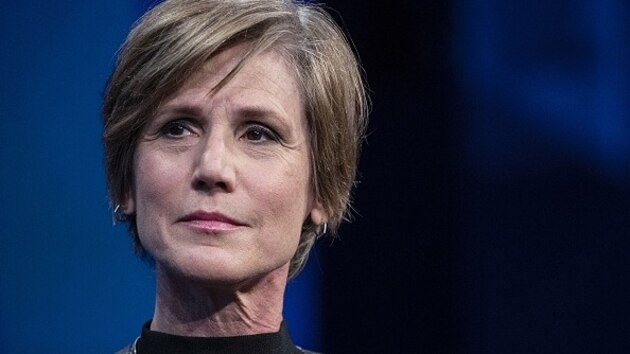
Cornell University appointed former U.S. Attorney General Sally Yates, October 6, 2026, to lead an independent review of the school's response to sexual harassment, sexual assault and related conduct. (Bloomberg via Getty Images)

Cornell University announced on Tuesday that former U.S. Deputy Attorney General Sally Q. Yates has been retained to lead a "comprehensive independent review" into how the school "prevents and responds to sexual harassment, sexual assault and related misconduct on campus" amid allegations of a fraternity house gang rape.

The announcement was made by the newly formed Special Committee of the Cornell University Board of Trustees.

Yates is a partner in the international law firm King & Spalding.

"Sally Yates brings extraordinary experience, independence and judgment to this work," Anne Meinig Smalling, chair of the Special Committee, said in the statement.

Yates’ appointment follows a lawsuit filed on Sept. 16 by a former undergraduate student known only as Jane Doe, in which she alleged she was drugged and gang-raped in 2024 at the Chi Phi fraternity house on the Cornell campus.

Yates will also "conduct a detailed review of the University’s response" to that incident, "including whether Cornell followed its policies and procedures in responding to the matter," the announcement said.

The case has rocked the university and started conversations about the treatment of alleged sexual assault on college campuses.

 "The questions raised by the Jane Doe matter warrant a rigorous examination of Cornell's response to that case, but our responsibility is broader," Smalling said. "We have asked Ms. Yates and her team to examine Cornell’s overall approach to preventing and responding to sexual misconduct, identify where we are doing things well and where we can do better, and recommend changes that will help make our community safer."

The review, according to the Special Committee's statement, will assess Cornell's practices against applicable requirements under Title IX, the Clery Act, the Violence Against Women Act's Campus SaVE Act and New York State law, as well as recognized best practices in higher education for preventing and responding to sexual misconduct.

The Special Committee said Yates and her team "will have full independence in conducting the review and will report their findings and recommendations directly to the Special Committee."

“It is imperative that Cornell be willing to examine itself with the same rigor we expect of others," Smalling said. "We want to understand not just what happened in 2024, but how Cornell can become a leader in preventing sexual violence, supporting those who come forward and responding to allegations rigorously, fairly and compassionately."

Jane Doe originally made a complaint to campus police in November 2024, three weeks after the alleged incident occurred.

Tompkins County District Attorney Matthew Van Houten said he reviewed the six-page Cornell Police Department's summary of the woman's statement that same month and decided based on that information that although the conduct in the case was "morally disturbing," it did not constitute a crime.

Van Houten reopened the case on Sept. 27 after speaking with Jane Doe and her lawyer in the wake of a civil suit being filed alleging that she had been drugged and raped. The men named in the lawsuit have denied all wrongdoing and have not been criminally charged.

Van Houten defended his decision not to bring charges in an interview with ABC News in September, saying, "she clearly consented in the beginning, and there was never any indication that she changed that to the things that she participated in."

"If at any point Jane Doe had said, ‘I don't consent to this anymore,' or in those words, or in any form of communication. If there had been continued sexual activity, contact by these individuals, that would be a crime. But that's not what was alleged in her statement," Van Houten said.

Documents reviewed by ABC News show that campus police noted that "a female undergraduate student reported that she was recently raped by 8-10 men at the Chi Phi fraternity house" but that information was never passed on to the district attorney.

Last week, New York Gov. Kathy Hochul, a Cornell board member, removed the Van Houten from the case and appointed the state's attorney general, Letitia James, as special prosecutor.

The New York Attorney General's Office said it had already reached out to Jane Doe as part of the re-opened criminal investigation.

Van Houten supported the decision and put the blame on Cornell.

In notes from 2024 reviewed by ABC News, a Cornell officer memorialized a call with the DA’s office that said Van Houten's office declined to review additional evidence gathered by campus police before deciding not to charge the alleged attackers. The investigator for the campus police said he reached out to the DA's office, but they "stated that they all agreed that, based on [her] statement, criminal charges would not be pursued in this case."

Van Houten has said Cornell police did not share all the materials they had. 

Cornell said in a statement on Sept. 21 that it takes allegations of sexual violence "extremely seriously" and that it "investigated and adjudicated the allegations consistent with university policies."

In a subsequent statement, the school said it conducted a "thorough" Title IX investigation and "issued a range of sanctions, which included expulsions and suspensions from Cornell.

Cornell's president, Michael Kotlikoff, released a video statement on Oct. 3, saying the incident is a "defining moment" and pledged reforms to campus culture and university policies and procedures.

Copyright © 2026, ABC Audio. All rights reserved.


Family Features

Loading Family Features Content Widget
Loading Family Features Article